
Construction Firm Organizational Structure: 2026 Guide for Growth | R. Construction Solutions
A construction firm organizational structure is the formal framework that defines roles, responsibilities, and reporting relationships within a construction company, directly determining how efficiently projects get planned, staffed, and delivered. Without a clear structure, authority gaps appear, communication breaks down, and small coordination failures snowball into costly project delays. Construction professionals and business leaders who understand this framework gain a measurable advantage in resource allocation, compliance, and team performance. This article covers the four primary structure models, contractor classification systems, field versus office coordination, and practical design guidance for firms at any growth stage.
What is construction firm organizational structure and why does it matter?
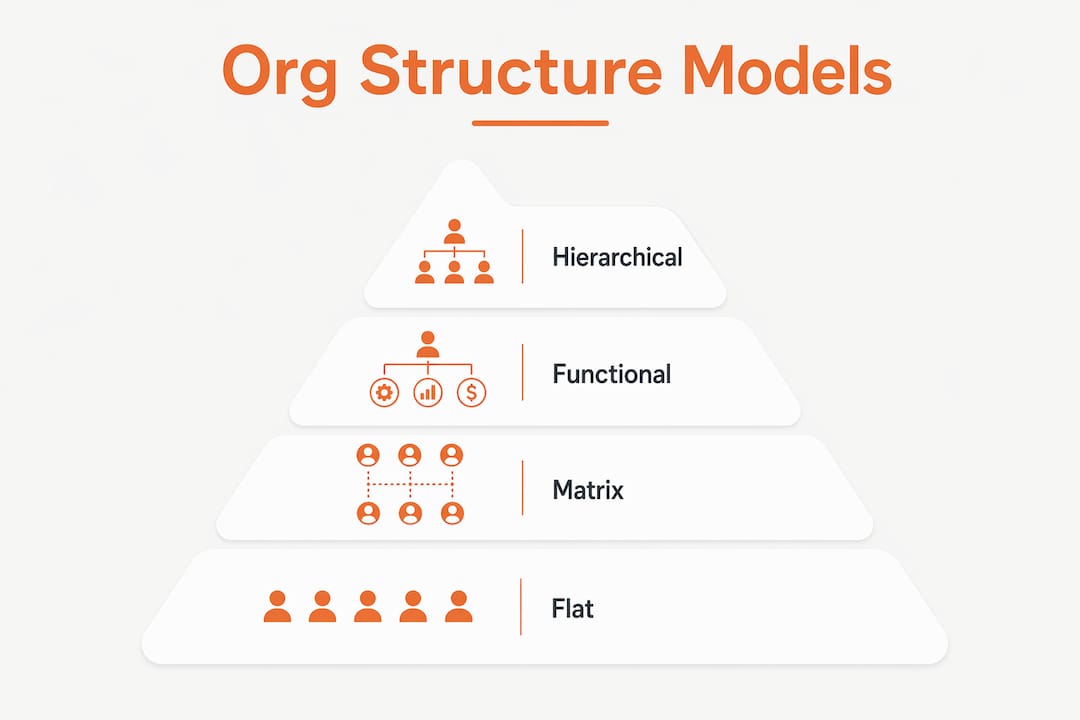
A construction firm organizational structure is the deliberate arrangement of authority, roles, and workflows that governs how a company operates from the executive level down to the job site. The industry recognizes four primary models: hierarchical, functional, matrix, and flat, each suited to different project types and company sizes. Choosing the wrong model for your firm’s scale or project complexity creates friction at every level, from estimating through closeout.
The structure also shapes legal and financial exposure. Contractor classification, reporting lines, and accountability chains all feed into bonding requirements, insurance coverage, and lien rights. A firm that treats its organizational design as an afterthought typically discovers these gaps during a dispute or audit, not during planning.
Pro Tip: Draw your current organizational chart before evaluating any new model. Seeing what you actually have, versus what you assume you have, is the fastest way to identify gaps.

What are the common organizational structure models used in construction firms?
Construction firms typically operate under one of four models, selected based on project complexity, company size, and operational needs.
Hierarchical structure
The hierarchical model follows a vertical chain of command from the owner or CEO down through project managers, superintendents, foremen, and crews. Hierarchical structures provide clear authority and communication pathways that prevent fragmentation on complex projects. This model works best for mid-sized to large general contractors managing multiple simultaneous projects, where accountability at each level is non-negotiable. The trade-off is slower decision-making at lower levels, since approvals travel up the chain.
Functional structure
A functional model groups employees by specialty: finance, estimating, operations, safety, and procurement each form their own department. Functional structures support deep expertise within each group but risk creating silos when departments fail to coordinate. A commercial contractor running a large estimating department alongside a separate field operations team benefits from this model. The risk is that project-level communication suffers when no single person owns cross-departmental coordination.
Matrix structure
The matrix model assigns employees to both a functional department and a specific project, creating dual reporting lines. Matrix models combine functional and project-based reporting, which requires deliberate communication strategies to avoid confusion. A project manager and a department head both direct the same employee, which accelerates resource sharing but demands clear protocols. Firms managing multiple complex projects simultaneously, such as a regional commercial builder with five active sites, get the most value from this approach. Read more about managing matrix coordination in practice.
Flat structure
A flat structure minimizes management layers, which speeds up decisions and keeps communication direct. Small residential contractors or specialty trade firms with fewer than 20 employees often operate this way by necessity. The advantage is agility. The limitation is that flat structures strain quickly as headcount grows, because one owner or manager cannot effectively supervise 40 people without layers of support.
| Model | Best fit | Key strength | Key risk |
|---|---|---|---|
| Hierarchical | Mid to large GCs | Clear authority | Slow decisions |
| Functional | Specialty-heavy firms | Deep expertise | Departmental silos |
| Matrix | Multi-project firms | Resource flexibility | Reporting confusion |
| Flat | Small firms | Fast communication | Limited scalability |
Pro Tip: Most growing firms start flat and need to formalize hierarchy around the $5 million revenue mark. If you are adding project managers faster than you are adding structure, your org chart needs attention before your next project cycle.
How are key roles and contractor classifications integrated within the organizational structure?
The construction sector organizes contractor roles into six key classifications: general contractor, subcontractor, sub-tier subcontractor, specialty contractor, supplier, and independent contractor. Each carries distinct contractual relationships, reporting positions, and regulatory obligations. Understanding where each role sits in your structure is not just an operational question. It directly affects lien rights, bonding, and insurance coverage.
Here is how each classification typically integrates into the organizational chart:
- General contractor (GC): Holds the prime contract with the owner. Sits at the top of the project delivery chain and bears full accountability for schedule, budget, and subcontractor performance.
- Subcontractor: Contracts directly with the GC. Reports to the GC’s project manager or superintendent on site. Carries its own license, insurance, and often bonding.
- Sub-tier subcontractor: Contracts with a subcontractor, not the GC. This layer creates additional complexity in lien rights and payment flow tracking.
- Specialty contractor: Operates in a licensed trade such as electrical, mechanical, or fire suppression. May contract at the GC or subcontractor level depending on project delivery method.
- Supplier: Provides materials without performing labor. Holds lien rights in most U.S. states but does not appear in the labor reporting chain.
- Independent contractor: Engages on a project basis without an employment relationship. Legal and financial risks tie more to this classification than to trade labels, affecting bonding and insurance exposure.
The role of a project manager sits above subcontractors in the reporting chain and below the GC’s executive leadership, making it the critical coordination node across all classifications.
| Classification | Reports to | Key legal implication |
|---|---|---|
| General contractor | Owner/client | Full project liability |
| Subcontractor | GC project manager | Independent lien rights |
| Sub-tier subcontractor | Subcontractor | Complex lien chain |
| Independent contractor | GC or sub | Misclassification risk |
Why is separating field execution and office coordination critical?
Effective construction companies draw a clear line between field execution leadership and office-based support roles. When these functions blur, the results are predictable: project managers spend time on payroll questions, site foremen wait on procurement decisions, and no one owns the schedule.
Field roles carry direct site authority. Foremen and site superintendents make real-time decisions about crew deployment, safety compliance, and daily sequencing. Successful structures empower site-level leadership with enough autonomy for real-time decisions while maintaining centralized scheduling and procurement control in the office. That balance is what keeps projects on schedule without creating bottlenecks.
Office roles handle the functions that require centralized data and cross-project visibility:
- Project coordinator: Tracks submittals, RFIs, and document control across active projects.
- Estimator: Prepares bids and feeds cost data back to project managers.
- Scheduler: Builds and updates master schedules, flags conflicts before they reach the field.
- Finance and accounting: Manages job costing, payroll, and owner billing.
- HR and compliance: Handles workforce classification, certifications, and safety recordkeeping.
The operations manager role bridges field and office by translating site conditions into office decisions and vice versa. Without this role, or a clear equivalent, the two functions operate in parallel rather than in coordination.
Pro Tip: Hold a weekly 30-minute field-to-office sync with your superintendent and project coordinator. This single meeting prevents the majority of miscommunications that cause rework and missed deadlines.
How to design an organizational structure that aligns with project demands and company growth?
Designing a construction company structure that holds up under growth requires deliberate choices, not organic evolution. Most firms that struggle with structure did not design it badly. They simply never designed it at all. The following steps give you a repeatable framework.
-
Audit your current state. Map every role, reporting line, and decision point that exists today. Identify where authority is unclear or where one person holds responsibilities that belong to two different functions.
-
Match the model to your project profile. A firm running three simultaneous commercial projects needs a different structure than one running 30 residential builds. Project complexity and geographic dispersion both drive model selection. Organizational charts assist in clarifying authority, improving communication, and supporting resource allocation across projects.
-
Define clear chains of command. Every employee should know who they report to, who reports to them, and who makes final decisions on budget, schedule, and scope changes. Ambiguity at this level creates the conditions for conflict.
-
Build in flexibility without losing accountability. Matrix structures offer flexibility, but they require written protocols for dual reporting. Define which manager has final authority on scheduling conflicts and resource disputes before they arise.
-
Review the structure at each growth milestone. A firm crossing $10 million in revenue, adding a new service line, or entering a new market needs a structural review. The construction business planning process should include organizational design as a standing agenda item.
Common mistakes to avoid: unclear role boundaries between project managers and superintendents, overlapping procurement authority between field and office, and failing to update the org chart after personnel changes. Small issues in these areas compound quickly across a multi-project portfolio.
Pro Tip: Use a visual org chart tool and share it with your entire team, not just leadership. When every employee can see the structure, they self-direct more effectively and escalate issues to the right person faster.
Key Takeaways
A well-designed construction firm organizational structure is the single most controllable factor in whether your projects run efficiently or constantly require firefighting at the leadership level.
| Point | Details |
|---|---|
| Four primary models exist | Hierarchical, functional, matrix, and flat structures each suit different firm sizes and project types. |
| Contractor classification affects legal exposure | General contractor, subcontractor, and independent contractor labels carry distinct lien, bonding, and insurance implications. |
| Field and office must be clearly separated | Blurring these functions creates scheduling delays, procurement bottlenecks, and accountability gaps. |
| Org charts clarify authority | A shared, visual organizational chart reduces escalation errors and speeds up daily decision-making. |
| Structure must evolve with growth | Firms should review their organizational design at every major revenue or project milestone. |
What I’ve learned about structure after 30 years in construction consulting
Most contractors I work with underestimate how much their organizational structure is costing them. Not in a theoretical sense. In real dollars: rework caused by unclear authority, bids lost because estimating and operations are not coordinated, and key people burning out because they are doing three jobs with no title for any of them.
The firms that scale well, from $5 million to $50 million and beyond, share one trait. They treat their org chart as a living document, not a one-time exercise. They revisit it when they hire a new project manager, when they win a contract in a new market, and when a key person leaves. Structure is not bureaucracy. It is the mechanism that lets good people do their best work without constantly running into each other.
The other thing I have seen consistently: the field-to-office divide is where most firms lose the most efficiency. Site superintendents who cannot make a $500 procurement decision without calling the office are not empowered. They are bottlenecked. And the office team that does not have real-time visibility into site conditions cannot schedule accurately. Both sides suffer when the handoff is not designed deliberately.
My advice is to stop treating organizational design as something you do once when you incorporate. Treat it as an operational discipline, the same way you treat safety or quality control. The firms that do this consistently outperform those that do not, regardless of market conditions.
— Rowena
How Rconstructionsolutions supports your firm’s organizational design
Rconstructionsolutions works directly with residential and commercial contractors to assess, design, and refine organizational structures that match real project demands.

With over 30 years of hands-on construction experience, the Rconstructionsolutions team identifies where your current structure creates friction and builds a clear plan to fix it. Whether you are a mid-sized firm scaling past $10 million or a specialty contractor formalizing your first management layer, the construction consulting services at Rconstructionsolutions deliver practical, field-tested guidance. The goal is a structure that your team actually uses, one that reduces confusion, speeds up decisions, and positions your firm for sustainable growth.
FAQ
What is a construction firm organizational structure?
A construction firm organizational structure is the formal framework that defines roles, reporting lines, and decision-making authority within a construction company. It governs how projects are coordinated from executive leadership down to field crews.
What are the four main types of construction organizations?
The four primary models are hierarchical, functional, matrix, and flat. Each suits different company sizes and project complexity levels, with hierarchical being most common in mid-to-large general contracting firms.
How does contractor classification affect organizational structure?
Contractor classifications such as general contractor, subcontractor, and independent contractor determine reporting positions, lien rights, bonding requirements, and insurance obligations within the firm’s structure.
Why does separating field and office roles matter?
Blurring field execution and office coordination creates bottlenecks, miscommunication, and accountability gaps. Clear separation empowers site leaders to make real-time decisions while office teams maintain centralized scheduling and financial control.
When should a construction firm update its organizational structure?
A firm should review its structure at every major growth milestone, such as crossing a new revenue threshold, adding a service line, or entering a new geographic market. Organizational design should be treated as an ongoing operational discipline, not a one-time setup task.