
Audit-Ready Subcontractor Onboarding: A 7–10 Day Guide for GCs | R. Construction Solutions
Collect a live-verified Certificate of Insurance, a current state contractor license, a signed subcontract agreement, and a valid W-9 before any subcontractor sets foot on your jobsite. The hard rule that separates disciplined general contractors from the ones who end up in a deposition: no site access until every document is verified, not just collected. Your compliance coordinator or project manager owns that gate, and the two highest-risk items on the list, the COI and the license, deserve the most scrutiny because they’re also the easiest to fake or let expire quietly.
TL;DR:
- Verifying insurance coverage with the carrier and confirming policy status before mobilization prevents overreliance on outdated PDFs, reducing liability.
- Checking licenses against live state databases and running TIN matches on W-9s ensures documentation is current and legally valid for the scope of work.
- Conducting a full re-verification 30 days prior and maintaining active credential tracking minimizes lapses that could expose the contractor to legal or safety risks.
- Implementing integrated onboarding systems within project management platforms enforces compliance gates automatically, preventing site access until all conditions are verified.
- Regular post-onboarding engagement and structured record-keeping build ongoing contractor accountability, improving safety, quality, and compliance over the project lifespan.
Table of Contents
- Full Subcontractor Onboarding Checklist: What to Collect and Why
- How Do You Verify a Subcontractor’s Documents, Not Just Collect Them?
- What’s the Right Timeline for Clearing a Subcontractor Before Mobilization?
- What Should a Subcontractor Site Orientation Actually Cover?
- How Do You Track Credentials So Nothing Lapses Mid-Project?
- When Should You Escalate to Full Subcontractor Prequalification?
- Templates and Field Structures That Speed Up the Process
- How Do You Train Subcontractors on Company Policy and Safety Rules?
- What Goes Wrong Most Often During Subcontractor Onboarding?
- Should Onboarding Live Inside Your Project Management Software?
- What Legal and Regulatory Issues Go Beyond the Paperwork?
- How Do You Keep Subcontractors Engaged After Onboarding Is Done?
- Why Standardizing This Process Protects Your Margin
- Get Help Building an Onboarding Program That Actually Holds Up
- Where to Verify Documents and Find Compliance Resources
- Sources
Full Subcontractor Onboarding Checklist: What to Collect and Why
A solid onboarding process starts with a document list that matches what actually protects you when a claim, an audit, or an owner review lands on your desk. Here’s the intake set that should sit in every subcontractor’s file before mobilization, along with why each item earns its place.
- Certificate of Insurance (ACORD 25): Confirm general liability, auto, and umbrella coverages meet your minimums, that your company appears as additional insured, and that a waiver of subrogation and primary/non-contributory endorsement are attached. Note the carrier’s rating if the scope is high-value.
- W-9: Match the legal name and TIN exactly to the contract entity. Collect this before the first payment goes out, not after, since a mismatch discovered post-payment creates a tax headache nobody wants.
- State contractor license: Confirm the classification fits the actual scope of work and that the license shows active status in the issuing state’s database, not just a card in a wallet.
- Signed subcontract agreement: This should spell out scope, payment terms, indemnification language, and the lien waiver flow tied to each draw.
- Business entity documents: Articles of organization or incorporation, confirming the entity you’re contracting with is the entity actually doing the work.
- Workers’ comp proof or exemption certificate: A gap here is one of the fastest ways a GC inherits liability that was never supposed to be theirs.
- Conditional lien waiver: Tied to the first payment application, setting the precedent for every subsequent draw.
- ACH authorization and payment information: Gets subs paid faster and reduces the paper-check chase that eats up your accounting team’s week.
- Background check consent: Especially relevant on projects with access-controlled sites, schools, or government facilities.
- Project safety acknowledgment: A signed document confirming the sub has received and understood your site-specific safety rules.
Some scopes need more. Add bonding requirements for structural or high-dollar work, add DBE/MBE paperwork when the project owner requires certified participation reporting, and add reference checks when you’re bringing on a subcontractor you haven’t worked with before. Confirming a new sub’s actual capacity to staff the job matters just as much as their paperwork; an estimating checklist built for general contractor projects can help you spot overcommitment before it becomes your problem mid-schedule.
How Do You Verify a Subcontractor’s Documents, Not Just Collect Them?
Collecting a document proves nothing. Verifying it is what actually protects you, and it’s the step most GCs skip when they’re under schedule pressure.
- Verify the COI directly with the carrier or broker. Don’t rely on the PDF alone. A Certificate of Insurance is a snapshot in time and can be canceled mid-term without your knowledge unless you call to confirm it’s still active. Confirm the additional insured endorsement and primary/non-contributory language exist on the actual policy, and check the carrier’s AM Best rating when the contract value is significant.
- Check the license against the live state board database, not a photocopy the sub handed you. Confirm the classification matches the scope and the jurisdiction is correct. Our licensing requirements checklist walks through state-by-state classification quirks that trip up GCs working across multiple markets.
- Run TIN matching on the W-9 where available, and confirm the business name on the form matches the name on the signed contract exactly.
- Confirm the subcontract agreement is fully countersigned, references the correct project, and includes the exhibits and lien waiver language you actually intend to enforce.
- Escalate for high-risk scopes. That means a direct carrier confirmation call, an OSHA citation search, an experience modification rate (EMR) check, and a lien or UCC filing search when the contract value or hazard level justifies it. A structured prequalification process exists precisely because paperwork alone doesn’t catch a subcontractor sliding toward financial distress or a pattern of safety citations.
Pro Tip: Capture a screenshot of every live license and insurance lookup, timestamped, with the verifier’s name attached. A PDF the sub sent you proves nothing about when you checked it; a screenshot proves you checked it before mobilization, which is exactly what you need if a claim ever challenges your due diligence.
What’s the Right Timeline for Clearing a Subcontractor Before Mobilization?
Onboarding works best as a repeatable sequence with real deadlines attached, not a folder of documents someone chases down whenever they remember.
- Initial intake at award. Send the full document request the moment the subcontract is issued, giving the sub a clear packet and a due date.
- Target clearance within 7 to 10 business days of that request, which is a reasonable window for a sub to gather standard documents without holding up your schedule.
- Re-verify 30 days before mobilization. Insurance lapses, licenses expire, and entities change more often than GCs expect on projects with a long lead time between award and start.
- Final mobilization check as a hard stop. No badge, no site access, no material delivery authorization until every high-risk item shows current and verified status.
- Mid-project rechecks on long-duration jobs, since a COI verified in January doesn’t guarantee anything about coverage in October.
An expedited track exists for genuinely urgent mobilizations, but it only compresses paperwork turnaround, never the verification itself. Insurance and safety documentation can’t be deferred under any circumstances, full stop. Ownership splits cleanly across three roles: the compliance coordinator manages document collection and verification, the safety director owns training sign-off, and the project manager runs orientation and controls the final approval gate before anyone reaches the site.
What Should a Subcontractor Site Orientation Actually Cover?
A rushed ten-minute orientation is where a lot of avoidable rework and safety incidents start. A tight, well-run session covers three areas.
- Scope and sequencing: Walk through deliverables, milestones, and the specific coordination points where this sub’s work touches other trades.
- Safety: Site-specific rules, required PPE, required training documentation such as OSHA 10 or 30 cards, emergency procedures, and exactly who to report an incident to.
- Administrative logistics: How and when to submit timesheets and invoices, the change-order and RFI protocol, how site access badges get issued, and a named point of contact for day-to-day questions.
Skipping any one of these three tends to surface later as a missed deliverable, a safety violation, or a billing dispute that eats hours of PM time to untangle.
How Do You Track Credentials So Nothing Lapses Mid-Project?
Build one record per subcontractor per credential type, with the file attachment, issue date, expiration date, and verifier’s name all in one place. That record structure should also capture the verification method used, whether that’s a live lookup or a direct carrier call, plus a “next action” field so nothing sits in limbo.
- Set alert thresholds at 90, 30, and 7 days before expiration, and route those alerts to at least two people, typically the PM and the compliance coordinator, so a single missed email doesn’t create a gap.
- Use a RAG (red/amber/green) status per credential so a project manager can see at a glance which subs are clear and which need attention before the next milestone.
- Save every live lookup screenshot, verification note, and the identity of whoever performed the check as part of a permanent audit trail.
- Retain the full documentation package for the length of the project plus your state’s statute of limitations, since that audit trail is often the deciding factor in defending a negligent hiring claim.
Pro Tip: For subs on high-hazard scopes, layer a manual carrier confirmation call at 7 days before expiration on top of the automated 30-day alert. The automated alert catches most renewals; the manual call catches the ones where a policy actually lapsed and nobody told you.
When Should You Escalate to Full Subcontractor Prequalification?
Standard onboarding covers most subs fine. Certain situations call for a deeper look before you sign anything.
- High-dollar scope, structural work, or anything classified as high-hazard.
- A newly formed entity with no track record you can check against.
- A subcontractor who plans to bring on their own lower-tier subs, which multiplies your exposure.
- Projects crossing state lines, where licensing and workers’ comp rules shift.
Full prequalification adds financial statement review, bonding capacity verification, background checks on the principals, and an OSHA citation and EMR review. Reserve that level of scrutiny for the scopes above; running it on every $5,000 punch-list sub slows your whole pipeline for no real benefit, and that judgment call should be documented as part of your workflow rather than left to individual project managers’ discretion.
Templates and Field Structures That Speed Up the Process
Rowena Tulacz has spent more than 30 years advising construction operations and business development teams, and the pattern she sees repeatedly is simple: contractors who write down who owns each verification step close onboarding faster and defend themselves better in a dispute.
A workable credential record includes: subcontractor legal name, DBA, EIN, primary contact, credential type and ID number, issuing authority, issue and expiry dates, verifier name, verification method, file attachment, last-verified date, and RAG status. Pair that field list with a 30-day pre-mobilization recheck workflow, and you’ve built the backbone of an audit-ready program.
How Do You Train Subcontractors on Company Policy and Safety Rules?
Handing a sub a binder and calling it training doesn’t work, and every GC who’s had a subcontractor claim they “never got the safety packet” already knows it. Effective subcontractor training builds understanding, not just a signature on a form.
Run orientation as a structured session, not a paperwork drop. Walk through your site-specific safety rules verbally, confirm required certifications like OSHA 10 or 30 cards are current, and require a signed acknowledgment tied to the specific policies covered that day, not a generic company-wide form signed once and forgotten. For subs returning across multiple projects, a short refresher at each new mobilization keeps the information current rather than assuming last year’s training still applies.

Cover your reporting chain explicitly: who a foreman calls for an incident, who approves a change order, who signs off on quality control checkpoints. Ambiguity here is where rework and safety near-misses both tend to start. Larger subs with their own crews should also confirm they’re pushing your site rules down to their own workers, not just acknowledging them at the management level and stopping there.
Document every training session with a sign-in sheet, the topics covered, and who delivered it. That record becomes part of your onboarding file and matters just as much as your insurance verification if an incident review ever happens.
What Goes Wrong Most Often During Subcontractor Onboarding?
The most common failure isn’t a missing document. It’s a document that expired quietly while everyone assumed the file was still current.
Watch for these recurring pitfalls:
- Treating collection as verification. A sub emails a COI PDF and the file gets marked complete, with nobody actually calling the carrier to confirm the policy is still active.
- No single owner for the gate. When compliance responsibility is scattered across three people who each assume someone else is handling it, documents slip through.
- Schedule pressure overriding the hard stop. A superintendent needs bodies on site Monday, and the safety acknowledgment gets waived “just this once.” That once is exactly when something goes wrong.
- Stale records on repeat subs. A sub you’ve used on five prior jobs gets waved through without a fresh check, even though their license or insurance may have changed since the last project.
- Manual tracking in spreadsheets and email folders, which loses documents and misses renewal dates far more often than a structured system built for the purpose.
The fix for most of these is structural, not motivational. Build the hard stop into your process so it can’t be waived by a busy superintendent, and assign the compliance gate to one named role rather than a shared responsibility that nobody actually owns.
Should Onboarding Live Inside Your Project Management Software?
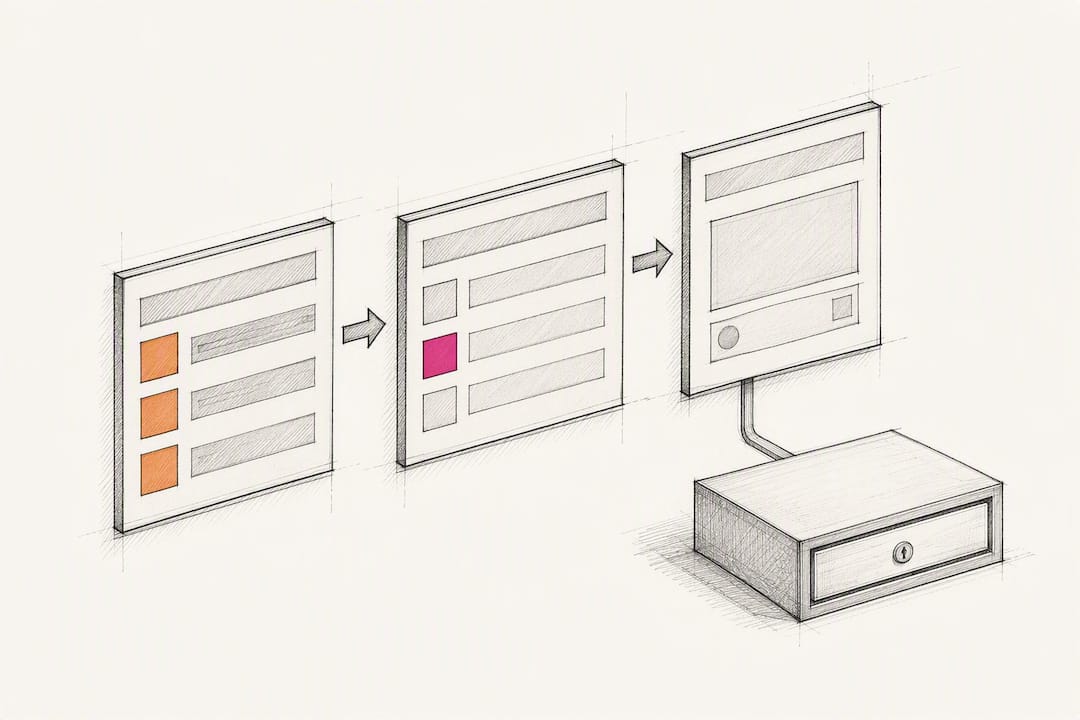
Running subcontractor onboarding through spreadsheets and a shared email inbox works until you have more than a handful of active subs, and then it falls apart fast. The fix is connecting your onboarding checklist to whatever project management or contractor management platform you’re already running.
Platforms like Procore or Buildertrend let you attach compliance documents directly to a subcontractor’s project record, set expiration alerts, and block scheduling or payment workflows until required fields show verified status. That’s a meaningful upgrade over a folder full of PDFs because the system enforces the hard stop automatically instead of relying on someone remembering to check. Automated verification and classification tools can go a step further, flagging compliance gaps against your minimum requirements before a PM even opens the file.
The integration point that matters most is payment. If your accounting or CRM system releases a draw without confirming current insurance and license status, you’ve built a workaround for your own hard rule. Whatever platform you use, the onboarding gate and the payment gate need to be the same gate, not two separate systems that occasionally disagree with each other.
What Legal and Regulatory Issues Go Beyond the Paperwork?
Document collection is the visible part of compliance. The legal exposure underneath it runs deeper.
General contractors carry real liability when a subcontractor’s negligence causes harm on a jobsite, and courts increasingly expect GCs to show they took reasonable steps to vet who they hired. Expert legal guidance treats a multi-disciplinary approval process, involving project management, safety, and financial review together, as the standard defense against a negligent hiring claim.
Beyond that core exposure, watch for jurisdiction-specific licensing rules that vary by classification and state line, workers’ comp exemption rules that differ depending on whether a sub is a sole proprietor or has employees, and public-project requirements that add layers most private jobs never see. A public construction contract compliance guide covers the additional obligations, like certified payroll and specific reporting requirements, that municipal and government-funded projects often add on top of your standard onboarding checklist.
How Do You Keep Subcontractors Engaged After Onboarding Is Done?
Onboarding isn’t a one-time event you close out and forget. The subs who cause the fewest problems mid-project are usually the ones who stay in regular contact after the paperwork clears.
Set a recurring check-in cadence, weekly for active subs on a fast-moving schedule, biweekly or monthly for subs with intermittent scope. Use that time to confirm schedule alignment, flag upcoming credential renewals before they lapse, and surface any change-order or RFI backlog before it becomes a dispute. A single named point of contact on your side, consistently available rather than rotating between whoever’s free, does more to keep a sub responsive than any formal communication policy on paper.
Close out each project with a short debrief covering performance, any documentation gaps that came up, and whether you’d bring that sub back. That record feeds directly into your next prequalification decision, turning ongoing engagement into a shortcut for future onboarding rather than a separate task competing for your time.
Why Standardizing This Process Protects Your Margin
Every insurance gap I’ve seen a GC absorb, and every mobilization delay caused by a license nobody checked, traced back to the same root cause: no standard process, so quality depended on whoever happened to be handling that file that week. A documented vetting process catches financial distress and coverage lapses before they become your liability instead of after.
For a small to mid-size contracting business, this is worth prioritizing before it feels urgent. The cost of building the system is far smaller than the cost of the claim it prevents.
— Rowena Tulacz
Get Help Building an Onboarding Program That Actually Holds Up
Most GCs don’t lack the checklist. They lack the time to build the verification workflow, train their team on it, and connect it to the software they already run. R Construction Solutions LLC works directly with growth-stage contractors to close that gap, mapping process design, compliance program setup, and PM system implementation to the exact points where onboarding tends to break down.

A typical engagement starts with a diagnostic review of your current intake process and a pilot run on one active job, so you see the workflow in practice before rolling it across your full subcontractor base. From there, engagements shape into either a fixed-fee project or an ongoing advisory retainer, depending on how much hands-on support your team needs. If your current onboarding process runs on scattered spreadsheets and whoever remembers to follow up, reach out through the construction consulting services page and get a diagnostic started before your next mobilization deadline.
Where to Verify Documents and Find Compliance Resources
Check license status directly through your state’s contractor licensing board, review OSHA’s guidance on required training and citation lookups, and use the IRS TIN matching program before issuing payment. For deeper licensing guidance by state, see R Construction Solutions LLC’s commercial construction licensing playbook.
Sources
- When general contractors are liable for subcontractor negligence | Maggiano Law
- Subcontractor prequalification checklist | BusinessScreen
- Contractor onboarding checklist | Subcontractor Audit
- Subcontractor compliance checklist | FileFlo blog
Recommended
- General Contractor Estimating Best Practices 2026
- Build an Estimating Checklist for General Contractor Projects
- Commercial Contractor Licensing Requirements Checklist 2026
- Construction Estimator Hiring Checklist for Contractors
Running the job and the business at the same time? One short email a week — change orders, billing, job costing, scheduling. Free, no pitch. Subscribe.
Free and unconditional. No call required, no obligation, unsubscribe anytime.