Homeowner Construction Project Manager: 2026 Guide
A homeowner construction project manager is defined as a dedicated professional who oversees every phase of a residential construction or renovation project on behalf of the property owner, protecting their budget, schedule, and quality standards from start to finish. This role is formally recognized in the construction industry as an owner’s project manager or owner’s representative, and the distinction matters. Americans spent $526 billion on home improvements in early 2026, with the median homeowner spending $20,000 per project. Without structured management, those budgets routinely spiral. A homeowner construction project manager exists specifically to prevent that outcome.
What does a homeowner construction project manager do?
An owner’s project manager acts as an independent advocate for the homeowner, managing the entire project lifecycle across budget, schedule, and quality. This professional does not build anything. They manage the people and processes that do the building.
The core responsibilities of this role cover every phase of a project:
- Scope planning and control: Defining what the project includes and preventing unauthorized additions that inflate costs.
- Schedule development: Building a realistic timeline, sequencing trades, and tracking milestones to keep the project moving.
- Budget oversight: Monitoring spending against the approved budget, flagging variances early, and managing contingency funds.
- Contractor coordination: Hiring, scheduling, and holding subcontractors accountable for performance and quality.
- Permit and inspection support: Submitting applications, scheduling inspections, and resolving any code compliance issues.
- Quality assurance: Conducting site visits to verify work meets specifications and industry standards before sign-off.
- Change order management: Documenting every scope change in writing, with cost and schedule impacts approved before work begins.
- Communication hub: Serving as the single point of contact between the homeowner, contractors, designers, and inspectors.
Core tasks for home renovation project managers in 2026 include all of the above, with particular emphasis on change order control and subcontractor coordination. Those two areas are where most residential projects lose time and money.
Pro Tip: Ask any project manager candidate to walk you through how they handled a change order dispute on a past project. Their answer reveals more about their real-world skills than any certification.
The communication function deserves special attention. A project manager acts as a central hub, handling decisions and updates so you do not spend your evenings fielding calls from the plumber and the electrician. That reduction in daily stress is one of the most underrated benefits homeowners report after working with a dedicated PM.

How does a project manager differ from a general contractor?
Many homeowners confuse the roles of general contractors and owner’s representatives. The confusion is understandable, but the difference is significant and directly affects your project outcomes.
A general contractor is responsible for physically delivering the construction work. They hire subcontractors, manage the job site, and earn a profit margin built into their contract. Their financial interest is in completing the work within their own budget, which may not always align with yours.
An owner’s project manager works solely for you. They carry no profit motive tied to construction costs and no loyalty to any subcontractor. Their job is to hold every other party accountable to your goals.
| Role | Primary loyalty | Profit motive | Budget oversight |
|---|---|---|---|
| General contractor | Their own contract | Yes, built into bid | Manages their own costs |
| Construction manager | Construction phase | Varies by contract | Focused on build logistics |
| Owner’s project manager | Homeowner | No | Full project budget |
A construction manager typically focuses on the construction phase itself, coordinating logistics on site. An owner’s project manager engages earlier, often before design is finalized, and stays involved through final closeout and warranty periods. That broader scope is what makes the role uniquely valuable for homeowners managing complex projects.
What are the real benefits of hiring a construction project manager?
The practical advantages of dedicated homeowner project management go well beyond having someone to call when things go wrong.
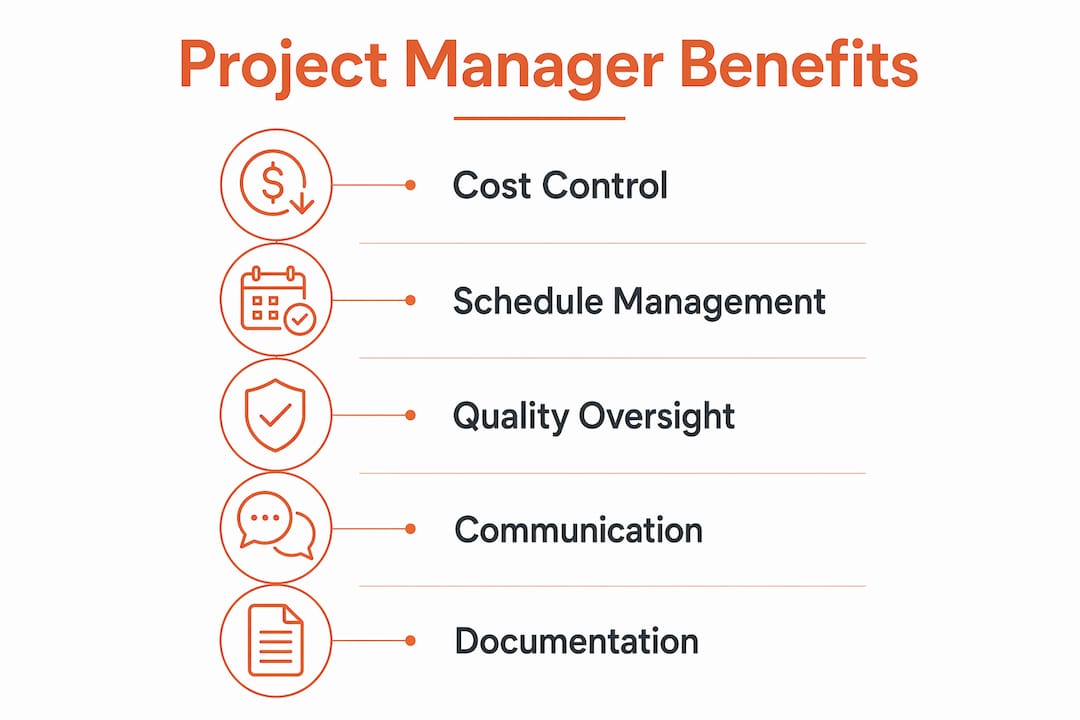
Budget overruns stem primarily from uncontrolled scope changes, unforeseen site conditions, and design errors. Effective project managers address all three before they become expensive problems. They conduct pre-construction investigations, build contingency budgets, and enforce strict change order control from day one.
The documented benefits homeowners gain from working with a PM include:
- Cost savings: A PM catches scope creep before it compounds. One undocumented change order can trigger a chain of cost increases across multiple trades.
- Time savings for you: You do not need to be on site daily or available for every contractor question. The PM handles it.
- Better quality outcomes: Regular site inspections catch defects before they are covered up by the next phase of work.
- Risk reduction: A PM identifies problems early, when they are still small. Small issues left unmanaged grow into expensive disputes.
- Documentation for resale and insurance: Written records of contractor contacts, estimates, change orders, and inspections provide legal and financial protection long after the project ends.
The documentation benefit is one most homeowners do not consider until they need it. When you sell your home or file an insurance claim, a complete project record is worth real money. A PM builds that record as a standard part of their process.
Pro Tip: Request a sample project report from any PM you interview. If they cannot show you a clear, organized example, their documentation practices may not protect you when it counts.
How to hire a project manager for your home project
Hiring a project manager before design is finalized maximizes the value they deliver. Early involvement allows them to challenge scope assumptions, pressure-test your program, and apply value engineering before contracts lock in costs. Waiting until construction starts means paying for their expertise after the most important decisions have already been made.
Follow these steps to hire the right professional:
- Define your project scope first. Know your approximate budget, timeline, and goals before interviewing candidates. A PM cannot give you a realistic proposal without this information.
- Check credentials and experience. Look for candidates with direct residential construction experience. Certifications from the Project Management Institute (PMI), such as the Project Management Professional (PMP), signal formal training. Field experience in residential construction is equally important.
- Ask the right interview questions. Ask how they handle contractor disputes, how they communicate progress, and how they document change orders. Ask for references from homeowners, not just contractors.
- Review their contract carefully. The agreement should define their scope of authority, reporting frequency, fee structure, and what decisions require your approval.
- Clarify decision-making authority. Agree upfront on which decisions the PM can make independently and which require your sign-off. Ambiguity here causes delays and frustration.
- Set communication expectations. Agree on a weekly written progress report at minimum. Verbal updates alone leave no record.
- Confirm their change order process. No scope change should proceed without written approval from you. This is non-negotiable.
Complex projects require structured coordination and realistic scheduling, not reactive problem-solving. A PM who cannot articulate a clear process for managing changes and tracking costs before the project starts will not perform better once the pressure is on.
The fee structure for owner’s project managers varies. Some charge a percentage of total project cost, typically in the range of 5%–15%. Others charge a flat fee or hourly rate. Get clarity on this before signing anything, and confirm what is included in their scope.
Key Takeaways
A homeowner construction project manager is the most direct protection you have against budget overruns, schedule failures, and quality problems on a residential construction project.
| Point | Details |
|---|---|
| Role definition | An owner’s project manager advocates solely for the homeowner across budget, schedule, and quality. |
| Key distinction | Unlike general contractors, owner’s PMs carry no profit motive tied to construction costs. |
| Hire early | Engaging a PM before design is finalized prevents costly changes after contracts are signed. |
| Documentation matters | Written change orders, inspection records, and contractor contacts protect you legally and financially. |
| Core value | PMs reduce homeowner stress by serving as the single point of contact for all project decisions. |
Why I think most homeowners hire a PM too late
After years of watching residential projects unfold, the pattern I see most often is this: homeowners bring in a project manager after something has already gone wrong. A contractor has walked off the job, a budget has blown past its limit, or a dispute over a change order has stalled the project for weeks. At that point, the PM is doing damage control instead of prevention.
The real value of this role is front-loaded. Early involvement before design lock-in enables value engineering and realistic goal setting that saves far more than the PM’s fee. I have seen homeowners save tens of thousands of dollars simply because their PM challenged an overly ambitious scope during the planning phase, before a single contract was signed.
The other misconception I encounter regularly is that a PM is only necessary for large, complex builds. That is not accurate. Any project involving multiple trades, permits, and a budget above $50,000 carries enough complexity to benefit from dedicated oversight. The cost of a PM is almost always less than the cost of one major unmanaged problem.
My honest recommendation: treat the PM fee as part of your project budget from the beginning, not as an optional add-on. The homeowners who do this consistently report better outcomes, less stress, and fewer surprises at final billing.
— Rowena
How Rconstructionsolutions supports homeowner project success
Rconstructionsolutions brings over 30 years of hands-on construction experience to homeowners who need expert guidance on managing complex residential projects. Their construction consulting services cover the full range of project management support, from pre-construction planning and contractor coordination to budget oversight and quality control.

The team at Rconstructionsolutions works as your advocate, not as a contractor with a profit motive tied to your build. They apply the same process improvement methods used by high-performing construction firms to residential projects, giving homeowners access to professional-grade oversight that protects their investment. If your renovation or new build needs structured management from someone who has seen every type of project challenge, Rconstructionsolutions is the place to start.
FAQ
What is a homeowner construction project manager?
A homeowner construction project manager, also called an owner’s project manager or owner’s representative, is a professional hired by the homeowner to oversee and coordinate a residential construction or renovation project. They manage budget, schedule, quality, and contractor relationships on the homeowner’s behalf.
How is an owner’s project manager different from a general contractor?
A general contractor builds the work and earns a profit margin from construction costs. An owner’s project manager works solely for the homeowner with no financial stake in the construction itself, providing unbiased oversight and advocacy.
When should I hire a construction project manager?
Hire a project manager before design is finalized. Early engagement allows them to apply value engineering and challenge scope assumptions before contracts lock in costs, which delivers the greatest financial benefit.
What qualifications should I look for in a project manager?
Look for direct residential construction experience, strong references from past homeowners, and formal credentials such as the Project Management Professional (PMP) certification from the Project Management Institute (PMI).
Do I need a project manager for a small renovation?
Any project involving multiple trades, permits, and a budget above $50,000 benefits from dedicated project management oversight. The PM fee is typically far less than the cost of one major unmanaged problem, such as an undocumented scope change or a contractor dispute.