Hands-On Construction Consulting: Benefits for Project Success | R. Construction Solutions
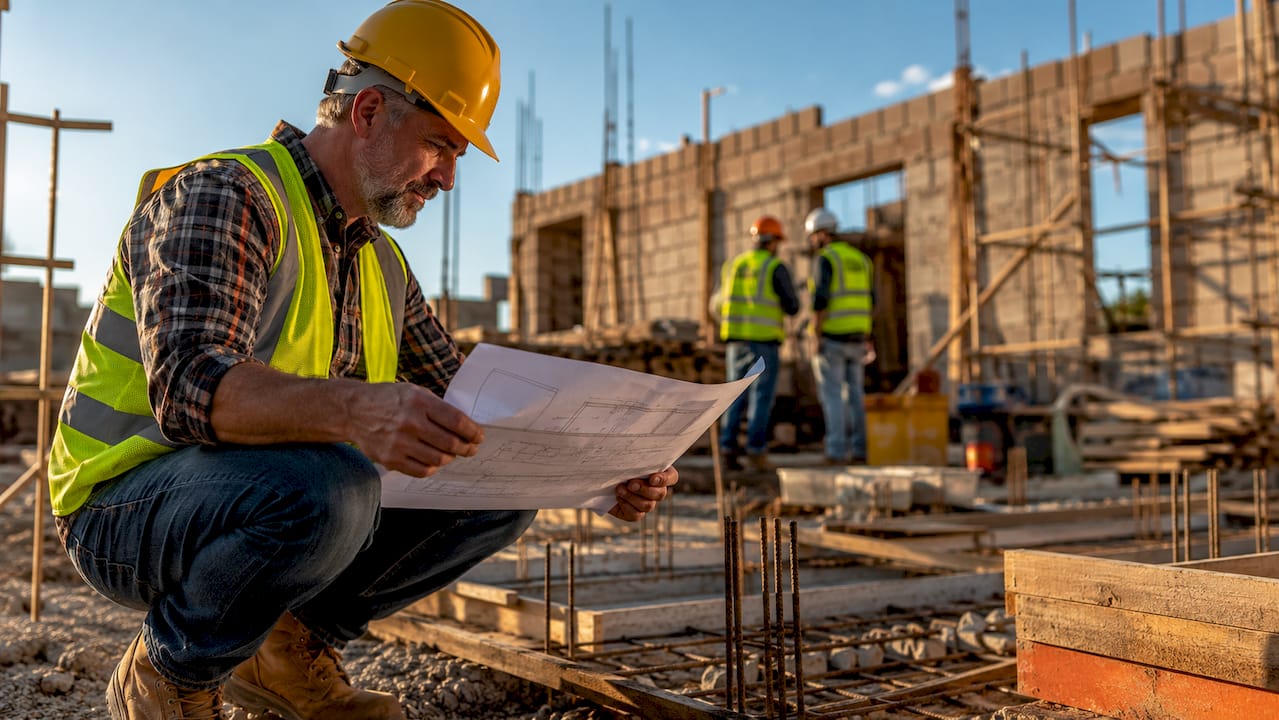
Hands-on construction consulting is defined as the direct, active involvement of an experienced construction professional in managing and overseeing key project stages, not just offering remote advice. Unlike traditional consulting that delivers reports from a distance, this approach puts a qualified expert on the ground, coordinating with engineers, designers, and contractors in real time. For contractors and construction professionals, understanding what this role delivers, and when to use it, is the difference between projects that stay on schedule and budget and those that spiral into costly rework. This guide breaks down the activities, benefits, and best practices behind hands-on construction services.
What does hands-on construction consulting mean in practice?
Hands-on construction consulting means an experienced pro actively manages project lifecycle stages rather than providing periodic check-ins or written recommendations. The consultant is present, engaged, and accountable throughout the project. That distinction matters because construction problems rarely announce themselves. Small issues snowball into big problems when no one is watching closely enough to catch them early.
The core activities in this model fall into five categories:
- Real-time job-site monitoring: The consultant tracks daily progress, contractor performance, and site conditions. This creates a continuous feedback loop instead of a monthly snapshot.
- Schedule and contract governance: Consultants verify that work sequences align with the approved schedule and that contractors meet their contractual obligations.
- Stakeholder coordination: The consultant acts as the communication hub between owners, engineers, designers, and subcontractors. Miscommunication between these parties is one of the top causes of project delays.
- Documentation and change order management: Every inspection, decision, and deviation gets recorded. Consultants link documentation directly to financing processes, managing draw requests, change orders, and lien waivers for smoother fund flow.
- Early risk identification: The consultant flags constructability issues, sequencing conflicts, and compliance gaps before they become schedule impacts.
Pro Tip: Ask your consultant to establish a weekly written site report from day one. That paper trail protects you legally and financially if disputes arise later.
This blend of field presence and administrative control is what separates hands-on construction services from a standard advisory engagement. You get a professional whose job is to keep your project moving, not just to document what went wrong after the fact.
How does hands-on consulting differ from contractors and traditional consulting?
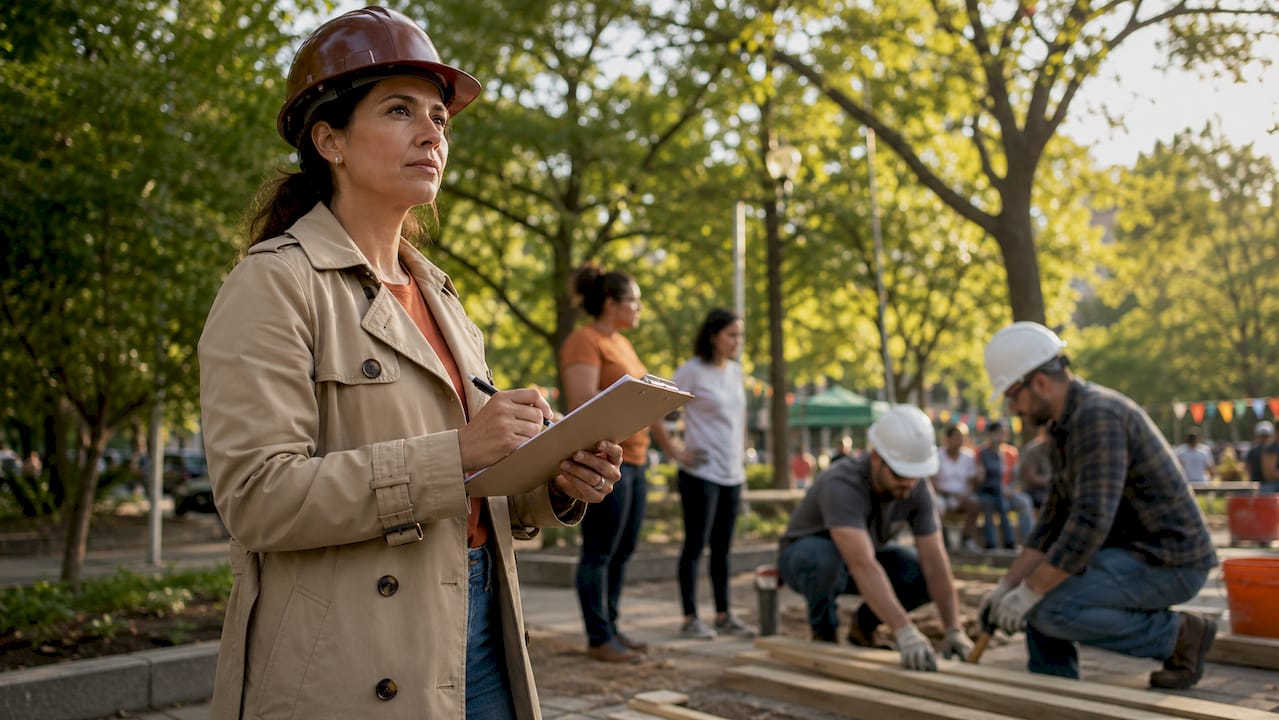
Contractors build. Consultants govern. That is the clearest way to separate the two roles. A general contractor is responsible for executing the physical work, managing crews, and delivering a finished product. A hands-on consultant is an independent advisor who represents the owner’s interests, monitors performance, and manages risk without picking up a tool.
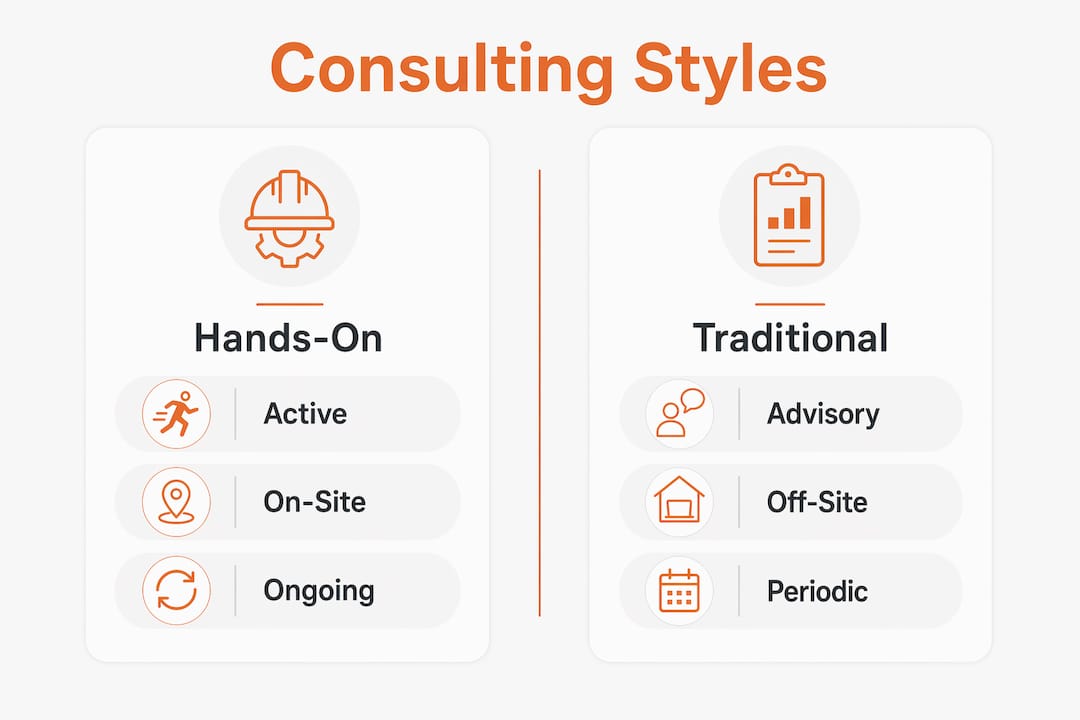
Traditional consulting often operates at arm’s length. A firm reviews plans, submits a report, and moves on. Construction consultants advise, coordinate, and problem-solve to improve project outcomes through risk and schedule management. That is a fundamentally different service model from writing a feasibility study and stepping back.
The table below shows where the roles diverge most clearly:
| Role | Primary Responsibility | Engagement Style | Key Deliverable |
|---|---|---|---|
| General Contractor | Execute physical construction work | Hands-on, labor-focused | Completed structure |
| Traditional Consultant | Advisory reports and recommendations | Remote or periodic | Written analysis |
| Hands-On Consultant | Oversight, coordination, risk management | Active, field-present | Governance and compliance |
The Institute of Construction Advisors and Consultants (ICAC) makes an important distinction here. Consultants gain more influence as trusted advisors rather than technical executors when they are engaged early. That early engagement shapes project outcomes before the first shovel hits the ground.
For contractors, this means the hands-on consultant is not your competition. The consultant is the owner’s advocate and your accountability partner. When roles are defined clearly from the start, the relationship improves coordination rather than creating friction.
What are the key benefits of hands-on construction consulting?
The benefits of construction consulting are most visible when something goes wrong on a project without a consultant present. Rework, missed draws, schedule overruns, and compliance failures all cost money. A hands-on consultant reduces the frequency and severity of each one.
Here are the five benefits contractors and owners report most consistently:
-
Risk reduction through early detection. Recurring inspections and documentation enable early issue detection and enforcement, preventing costly schedule impacts. Catching a sequencing error in week two costs far less than correcting it in week twelve.
-
Improved schedule and budget adherence. Consultants establish inspection cadence and decision protocols to maintain schedule and change management post-mobilization. Projects with active oversight drift less because accountability is built into the weekly rhythm.
-
Stronger stakeholder communication. A consultant creates a single point of coordination between owners, designers, and contractors. That reduces the back-and-forth that stalls approvals and decisions.
-
Quality assurance and compliance oversight. Independent oversight maintains control on quality, cost, schedule, and risk through factual reporting and compliance with design and regulatory standards. Owners get objective assessments, not self-reported progress from the contractor.
-
Better documentation for financial and legal processes. Draw requests, lien waivers, and change orders are processed faster when documentation is accurate and current. This directly affects cash flow for every party on the project.
Pro Tip: When evaluating the types of construction consulting services available, match the service scope to your project phase. Pre-construction consulting and job-site management serve different needs at different times.
The financial case for hands-on project management is straightforward. You spend money on oversight to avoid spending far more on corrections.
When should contractors engage hands-on construction consulting?
Timing is the most underestimated variable in construction consulting. Most contractors wait until a project is in trouble before calling a consultant. That approach limits what the consultant can actually fix.
Early hiring before scope is finalized is a key performance lever. Bringing a consultant in during pre-design and planning allows them to review drawings, flag constructability issues, coordinate designers, and sequence work before commitments are locked in. Redesign and rework are expensive. Prevention is not.
Here is when and how to engage a hands-on consultant for maximum impact:
- Pre-design and planning phase: Engage the consultant before detailed scopes and schedules are set. Early involvement mitigates redesign and costly rework by reviewing drawings, sequencing, and site conditions before construction begins.
- Procurement and contract review: A consultant reviews contractor bids, contract terms, and scope definitions to protect the owner from ambiguity that leads to disputes.
- Mobilization and construction execution: Once work begins, the consultant shifts to job-site management, conducting regular inspections, tracking progress, and enforcing accountability.
- Change order and draw management: The consultant validates change orders and links site progress to draw requests, keeping financing on track.
- Project closeout: Final inspections, punch lists, and documentation reviews are handled by the consultant to confirm all contractual obligations are met before final payment.
Defining the consultant’s role and authority before the project starts is equally important. Contractors who understand the consultant’s scope from day one collaborate more effectively. Ambiguity about who has authority to approve changes or stop work creates conflict. Clarity prevents it.
Experienced professionals who understand why contractor experience matters in planning and pre-construction consistently report better outcomes when consultants are part of the team from the beginning.
Key takeaways
Hands-on construction consulting delivers the most value when an experienced professional is engaged early, present consistently, and given clear authority to govern quality, schedule, and documentation throughout the project lifecycle.
| Point | Details |
|---|---|
| Active field presence | Hands-on consultants monitor job sites in real time, not through periodic reports. |
| Early engagement is critical | Bringing a consultant in before scope is locked prevents redesign and costly rework. |
| Distinct from contractor roles | Consultants govern and advise; contractors execute. Both roles are necessary and complementary. |
| Documentation drives cash flow | Accurate, consultant-managed records speed up draw approvals and protect against disputes. |
| Risk reduction is measurable | Continuous oversight catches sequencing errors and compliance gaps before they become schedule impacts. |
What i’ve learned about hands-on consulting after decades in the field
After working alongside contractors on projects ranging from residential builds to large commercial developments, one pattern stands out clearly. The contractors who struggle most are not the ones who lack skill. They are the ones who lack visibility into what is happening across their projects at any given moment.
Hands-on consulting fills that visibility gap. But here is what most articles on this topic miss: the value is not just in catching problems. It is in the discipline the consulting structure creates. When contractors know a qualified professional is conducting weekly site reviews and documenting everything, behavior changes. Subcontractors show up on schedule. Change orders get submitted properly. Quality standards get followed because accountability is real, not theoretical.
The most common misunderstanding I see is contractors treating consultants as a sign of weakness, as if needing oversight means you cannot manage your own projects. That thinking costs money. The most successful firms I have worked with, including mid-sized contractors scaling from $5 million to $50 million in revenue, actively use consulting as a management tool, not a last resort.
My advice: ask the right questions before you hire any consultant. Understand their field experience, their reporting cadence, and how they handle disputes between owners and contractors. A consultant who has never managed a job site cannot give you hands-on oversight. Experience in the field is non-negotiable.
— Rowena
How Rconstructionsolutions supports your projects with expert consulting
Rconstructionsolutions was built specifically for contractors who need more than generic advice. With over 30 years of direct construction experience, the team provides hands-on consulting services that cover pre-construction planning, job-site management, process improvement, and operational efficiency for both residential and commercial contractors.
Whether you are managing a $2 million residential project or scaling a commercial operation, Rconstructionsolutions delivers personalized strategies grounded in real field experience. The firm’s work with mid-sized contractors has produced measurable revenue growth, with clients scaling from $5 million to $50 million through better workflows, tighter documentation, and smarter project controls. If you are ready to put active oversight to work on your next project, explore the consulting options for contractors and find the right fit for your operation.
FAQ
What does hands-on construction consulting mean?
Hands-on construction consulting means an experienced professional actively manages and monitors project stages in real time, including job-site oversight, schedule governance, and risk identification, rather than providing remote or periodic advice.
How is a construction consultant different from a general contractor?
A general contractor executes physical construction work, while a consultant acts as an independent advisor who monitors performance, manages risk, and advocates for the owner’s interests without performing the labor.
When should you hire a hands-on construction consultant?
The best time to engage a consultant is during pre-design and planning, before detailed scopes and schedules are finalized. Early involvement prevents redesign, sequencing errors, and costly rework that are far more expensive to fix mid-construction.
What specific tasks does a hands-on consultant perform?
Hands-on consultants conduct real-time site inspections, manage documentation, coordinate stakeholders, review change orders, and link physical progress to draw requests and financing approvals throughout the project lifecycle.
Can hands-on consulting improve cash flow on a project?
Yes. Consultants manage draw requests, change orders, and lien waivers with accurate, current documentation. That accuracy speeds up financing approvals and reduces the delays that disrupt cash flow for contractors and owners alike.