
Construction Estimating Software: Improving Bid Accuracy & Efficiency | R. Construction Solutions
Construction estimating software is a digital platform that centralizes and automates project cost estimation, making bid preparation faster and more accurate for contractors and construction managers. The role of estimating software in construction bids goes well beyond replacing spreadsheets. It integrates quantity takeoffs, live material costs, labor rates, and subcontractor quotes into a single workflow, giving you a structured, data-backed bid instead of a manual calculation prone to costly errors. This article covers how that works in practice, what it means for your estimating team, and how to get the most from these tools in 2026.
How does estimating software improve accuracy and speed in construction bids?
Speed and accuracy are the two metrics that define a competitive bid. Modern construction estimating software with integrated takeoff tools allows estimators to create bids up to 10 times faster than traditional methods. That gap matters when a general contractor is juggling five open bids at once.
The speed gain comes from automation. Software pulls live material costs, current labor rates, and saved subcontractor quotes directly into the estimate. You are not re-entering numbers from a supplier email or cross-referencing a printed price list. The result is fewer transcription errors and a bid that reflects real market conditions.

AI-driven platforms push this further. Specialized tools cut manual residential or light commercial bid preparation time from 3 hours to 5 minutes per bid. That is not a marginal improvement. It means a small firm can respond to twice as many opportunities without adding headcount.
Key workflow improvements from modern construction bid estimating tools include:
- Automated quantity takeoffs that measure directly from digital plans, eliminating manual counting
- Live cost databases that update material and labor pricing without manual input
- Template libraries that apply standard assemblies to recurring scope items
- Built-in markup and overhead calculators that apply your firm’s rates consistently
- Audit trails that document every cost assumption for post-bid review
Pro Tip: Set up your cost database before you run your first bid. Software is only as accurate as the data you feed it. Outdated labor rates or stale material prices will produce a fast but wrong estimate.
How does centralizing project data improve subcontractor bid management?
Bid accuracy depends on more than your own cost calculations. Subcontractor quotes often arrive in different formats, cover different scopes, and carry different assumptions. Without a central system, comparing them is a manual, error-prone process.
Estimating software centralizes disparate project data, including material costs, labor rates, and subcontractor quotes, which is critical for bid leveling and scope normalization. Bid leveling means adjusting each subcontractor quote to a common scope so you are comparing apples to apples. Scope normalization catches the gaps. If one electrical sub excluded conduit and another included it, the software flags the discrepancy before it becomes a change order.
A structured subcontractor bid management workflow typically follows these steps:
- Send invitations to qualified subcontractors directly from the platform, with scope documents attached
- Track responses so you know who has opened the invitation and who has submitted a quote
- Import quotes into the leveling worksheet, aligning each line item to your master scope
- Normalize scope by adding or subtracting items each sub included or excluded
- Select the best value bid based on adjusted totals, not just the lowest number
The table below shows what bid leveling looks like in practice for a concrete subcontractor comparison:
| Line Item | Sub A Quote | Sub B Quote | Sub B Adjusted |
|---|---|---|---|
| Formwork | Included | Excluded | +$8,200 |
| Rebar supply | Included | Included | No change |
| Concrete pump | Excluded | Included | No change |
| Finishing | Included | Excluded | +$3,500 |
| Adjusted Total | $142,000 | $128,000 | $139,700 |
Sub B looks cheaper at first glance. After normalization, Sub A is the better value. Software makes this comparison systematic and documented, which protects you if the owner questions your subcontractor selection later.
How does software change the estimator’s role on your team?
The estimator’s job description has shifted. Modern estimating tools change the estimator’s role from manual measurement to active validation, letting professionals confirm what is counted and focus on strategic decisions. That shift is significant. It means your best estimators spend their time on scope definition, risk analysis, and client strategy rather than counting linear feet of pipe.
This does not reduce the value of experienced estimators. It raises it. Skilled estimators with spreadsheets often outperform novices using advanced software without expertise. The software handles computation. The estimator handles judgment.
Cloud-based platforms add a collaboration layer that traditional methods cannot match. Multiple team members can work on the same estimate simultaneously, project managers can review assumptions in real time, and principals can approve markups without waiting for an emailed spreadsheet. That speed of review compresses your bid cycle.
The most underused feature in most estimating platforms is the proprietary cost database. Without building and maintaining your own cost database, estimating software may be no more effective than advanced spreadsheets. Your database should reflect your actual subcontractor relationships, your crew productivity rates, and your regional material costs. Generic industry averages will not win you competitive bids.
Pro Tip: Assign one person on your team to own the cost database. Review it quarterly. Update labor rates after every union negotiation and material costs after every major supplier price change.
Key responsibilities that shift to the estimator in a software-enabled workflow:
- Defining scope boundaries and exclusions before the software runs takeoffs
- Reviewing software outputs for logic errors and missing items
- Applying project-specific risk factors to the base estimate
- Maintaining the firm’s proprietary cost database
- Communicating assumptions clearly to owners and project managers
What are the practical benefits of bid estimation software for real projects?
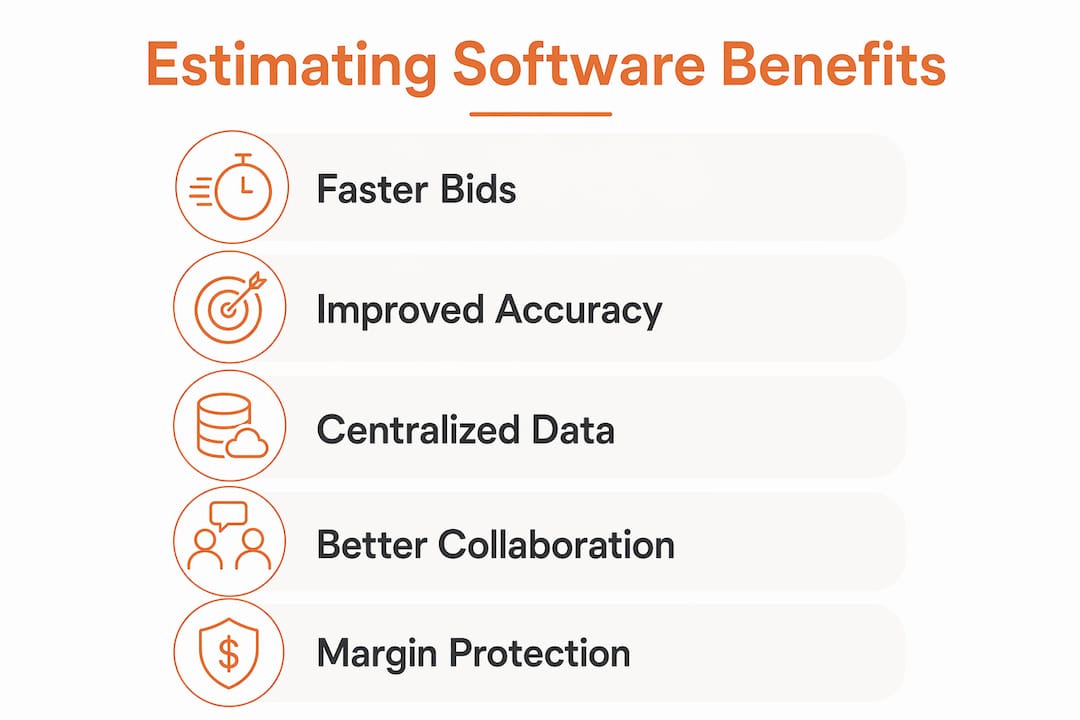
The benefits of bid estimation software show up in three places: win rate, margin protection, and responsiveness. Contractors who consistently win bids use structured estimating systems supported by data-focused software to improve accuracy, efficiency, and profitability. The connection between structured process and bid success is direct, not coincidental.
Responsiveness is an underrated competitive advantage. When an owner sends out a bid package, the contractor who responds first with a complete, professional proposal sets the standard. Modern estimating tools integrate quickly with business websites via minimal code, enabling instant estimates without complex IT infrastructure. That means a prospect can get a preliminary number from your website before they even call your office.
Risk reduction is another concrete benefit. Estimating systems provide a structured, assumption-based cost range, enabling informed go/no-go decisions rather than aiming for a single “perfect” estimate. You stop chasing every bid and start selecting the ones where your cost position is genuinely competitive.
Practical benefits contractors report from using construction bid estimating tools include:
- Faster bid turnaround that lets you pursue more opportunities per month
- Consistent markup application that protects gross margin across all projects
- Documented assumptions that reduce scope disputes during construction
- Integration with accounting and project management systems that eliminates double entry
- Historical bid data that improves future estimate accuracy over time
For contractors scaling from $5 million to $50 million in revenue, the construction estimating process is often the first workflow that breaks under growth pressure. Software gives that process the structure it needs to scale without proportionally increasing overhead.
You can also pair estimating software with bid automation best practices to further reduce the manual effort involved in getting proposals out the door. The combination of accurate estimates and automated delivery is where the real competitive edge lives.
For a deeper look at how AI is reshaping the takeoff process specifically, the AI takeoff tools available in 2026 are worth evaluating alongside your estimating platform.
Key Takeaways
Estimating software transforms construction bid preparation by replacing manual calculation with automated, data-driven workflows that improve accuracy, speed, and bid competitiveness.
| Point | Details |
|---|---|
| Speed improvement | Integrated takeoff tools create bids up to 10 times faster than manual methods. |
| Subcontractor bid leveling | Centralizing quotes and normalizing scope prevents costly pricing errors before bid submission. |
| Estimator role shift | Software handles computation; experienced estimators focus on scope, risk, and strategy. |
| Proprietary cost database | Maintaining your own cost data is what separates software from advanced spreadsheets. |
| Risk and go/no-go decisions | Structured, assumption-based estimates help you pursue the right bids, not just more bids. |
What I’ve learned about software and estimating judgment
After working with contractors across residential and commercial sectors, the pattern I see most often is this: firms invest in estimating software and then underuse it. They run takeoffs but skip the bid leveling module. They buy the platform but never build their own cost database. The software sits there doing 30% of what it could do.
The uncomfortable truth is that software does not fix a weak estimating process. It amplifies whatever process you already have. If your scope definitions are vague, the software will produce a fast, vague estimate. If your cost data is stale, you will lose bids or win them at the wrong margin.
What actually works is treating the software implementation as a process redesign project. You define your standard scope templates first. You build your cost database before you run a single live bid. You assign ownership of the data to a specific person. Then the software delivers on its promise.
I also want to push back on the idea that AI estimating tools are a shortcut for inexperienced estimators. The best estimating outcomes come from pairing strong software with strong estimators. AI cuts the time. The estimator catches what AI misses. That combination is what wins bids consistently.
If you are evaluating platforms, match the tool to your firm’s complexity. A residential remodeler and a commercial general contractor have very different needs. Entry-level field apps work well for straightforward residential scopes. Enterprise platforms with full subcontractor bid management are built for multi-trade commercial projects. Buying the wrong tier wastes money and creates adoption problems.
— Rowena
How Rconstructionsolutions helps contractors build better estimating workflows
Rconstructionsolutions works directly with residential and commercial contractors to build estimating processes that produce accurate, competitive bids at scale. The team brings over 30 years of hands-on construction operations experience, which means the advice is grounded in how projects actually run, not just how software is supposed to work.

Whether you are setting up your first digital estimating workflow or rebuilding a process that has not kept pace with your firm’s growth, the construction consulting services at Rconstructionsolutions are built for exactly that challenge. General contractors can also access specialized support through consulting for general contractors, which focuses specifically on bid accuracy and estimating competitiveness. The goal is a process that wins the right jobs at the right margin, consistently.
FAQ
What is the role of estimating software in construction bids?
Estimating software automates quantity takeoffs, centralizes cost data, and manages subcontractor quotes to produce faster, more accurate bids. It shifts the estimator’s focus from manual calculation to scope validation and strategic decision-making.
How much faster can estimating software create a bid?
Modern estimating platforms with integrated takeoff tools create bids up to 10 times faster than traditional manual methods. AI-driven tools reduce residential bid preparation from 3 hours to 5 minutes.
Does estimating software replace the need for an experienced estimator?
No. Software functions as a validation tool, not a replacement. Skilled estimators using spreadsheets regularly outperform inexperienced users on advanced platforms because human judgment on scope and risk remains critical.
What is bid leveling and why does it matter?
Bid leveling is the process of adjusting subcontractor quotes to a common scope so you can compare them accurately. Without it, you risk selecting a low bid that excludes key scope items, which leads to change orders and margin loss.
How do I choose the right estimating software for my firm?
Match the platform to your project complexity and volume. Residential contractors with straightforward scopes do well with entry-level field apps, while commercial general contractors managing multiple subcontractors need enterprise platforms with full bid management and scope normalization features.