Remote Estimating Service Contractors: What You Need to Know
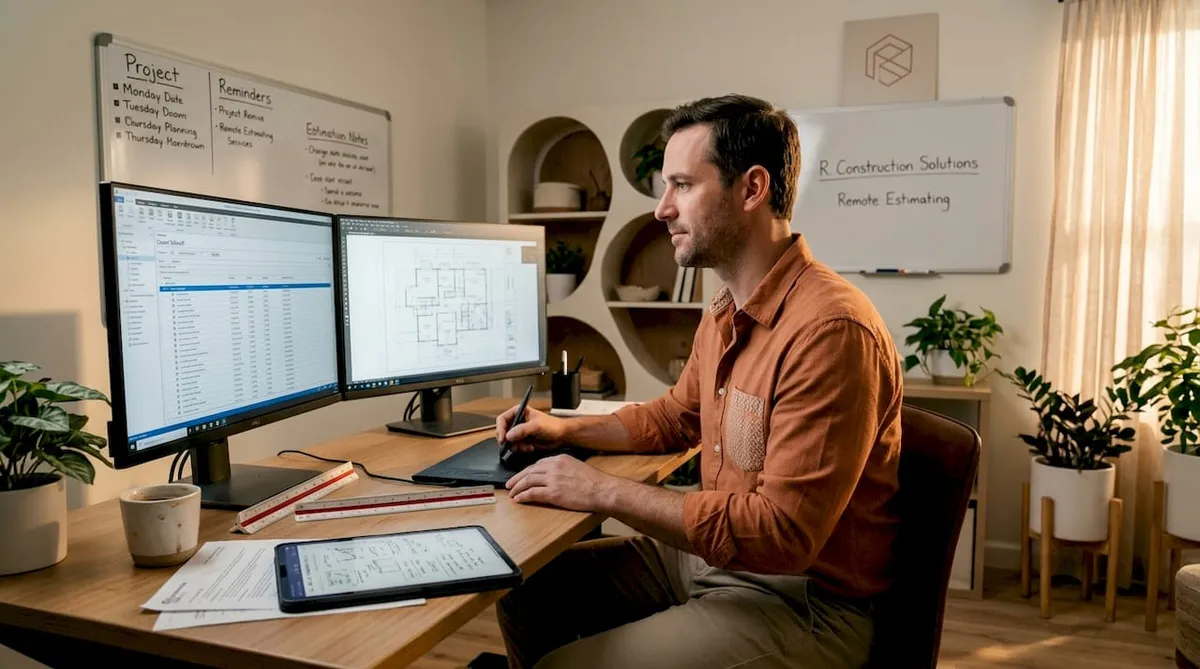
Remote estimating service contractors are specialists who produce complete construction cost estimates and quantity takeoffs from a remote location, using digital drawings, client-supplied photos and videos, and dedicated estimating software instead of visiting the jobsite. The industry term for this practice is “outsourced construction estimating,” and it covers everything from material takeoffs and labor calculations to overhead and profit margin analysis. Tools like Bluebeam, Procore, Planswift, and ProEst are standard in this workflow. For contractors exploring remote estimating services, understanding how these professionals operate is the first step toward making smarter bidding decisions and reducing the overhead tied to in-house estimating teams.
What is remote estimating service for contractors?
Remote estimating service contractors prepare project cost estimates and quantity takeoffs using project drawings and digital tools rather than being present on site. Their work breaks costs down by trade and accounts for materials, labor, equipment, overhead, and profit margins based on project specifications. This is not a simplified or stripped-down version of traditional estimating. It is the same rigorous process, executed through a digital workflow.
The core deliverable is a complete bid package. A remote estimator receives your drawings, runs a digital takeoff, applies current cost data, and returns a formatted estimate ready for submission. Depending on project complexity, turnaround runs 24 to 48 hours, with initial onboarding completed in roughly three business days. That speed is one of the most practical advantages for contractors working against tight bid deadlines.
What separates a skilled remote estimating contractor from a generic freelancer is specialization. These professionals focus exclusively on estimating, which means they stay current on material pricing, labor rates, and regional cost variations in a way that a generalist in-house employee rarely can. For contractors who serve both residential and commercial markets, that depth of knowledge translates directly into more competitive bids.
How remote estimating works: workflow, tools, and communication
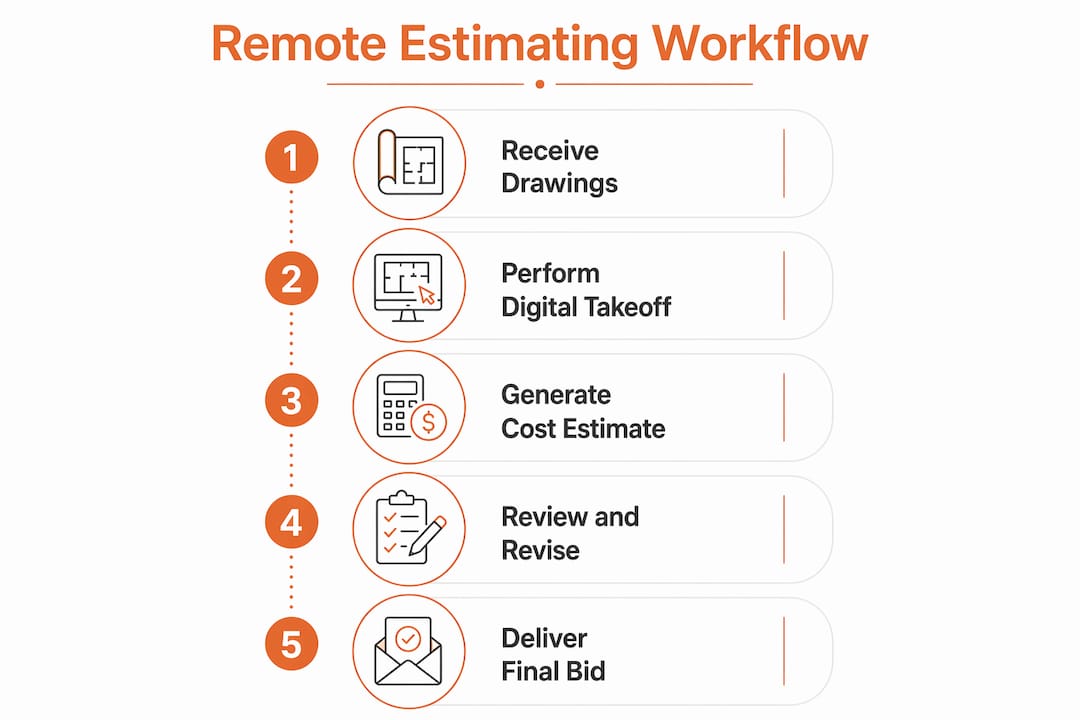
The standard remote estimating workflow follows a clear sequence. Understanding each step helps you set expectations and provide the right inputs from your end.
- Plan receipt and review: You upload drawings, specs, and any supplemental media (photos, videos, or 3D scans) to a shared cloud platform. The estimator reviews scope and flags ambiguities before starting.
- Digital takeoff: Using software like Planswift or Bluebeam, the estimator measures quantities directly from digital plans. Digital methods reduce manual measurement errors and eliminate re-entry mistakes that plague spreadsheet-based workflows.
- Cost calculations: The estimator applies material pricing, labor rates, equipment costs, and overhead to the measured quantities. Many remote estimators use live cost databases to reflect current market conditions.
- Estimate delivery: The completed estimate is returned in your preferred format, whether that is a CSV, Excel file, or a format compatible with Procore or your project management platform.
- Revision loop: If scope changes or clarifications arise, the estimator updates the estimate through a defined revision process.
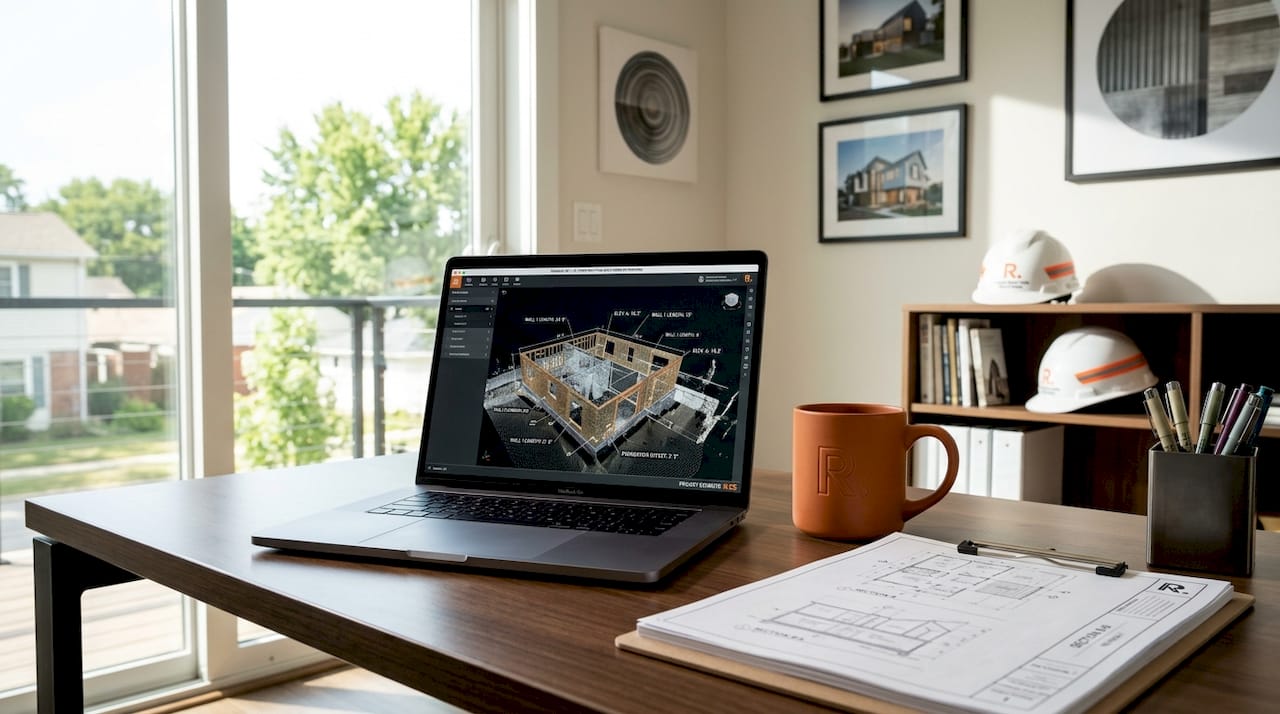
Virtual estimates use client photos, videos, and 3D scans to replace the traditional site walk. BIM integration is increasingly common for commercial projects, allowing estimators to extract quantities directly from model data rather than interpreting 2D drawings. This reduces interpretation errors and speeds up the takeoff phase significantly.
Collaboration happens through cloud platforms like Google Drive, Dropbox, or project-specific tools like Procore. Version control is non-negotiable. Without it, contractors and estimators risk working from different drawing revisions, which produces quantity discrepancies that can cost thousands of dollars on a single bid.
Pro Tip: Before sending drawings to a remote estimator, confirm the PDF scale is accurate and all sheets are at the correct resolution. Calibration errors in digital takeoff software are one of the most common sources of quantity discrepancies, and they originate with the input files, not the estimator.
Benefits of remote estimating for contractors vs. in-house teams
Contractors choose remote estimating services for three overlapping reasons: cost, capacity, and accuracy. Each one addresses a real operational pressure.
-
Reduced overhead. Outsourcing estimating eliminates payroll, benefits, software licenses, and training costs tied to a full-time in-house estimator. For a mid-size contractor, a senior estimator’s fully loaded cost can exceed $100,000 annually. Remote estimating converts that fixed cost into a variable one, paid only when you need bids produced.
-
Greater bid capacity. When your in-house team is at capacity, you turn down bid opportunities. Outsourcing expands capacity so contractors can pursue more projects without overloading existing staff. This is especially valuable during peak bidding seasons when multiple deadlines overlap.
-
Access to specialized expertise. Remote estimating contractors focus on one discipline. A dedicated electrical estimator, for example, tracks labor unit costs and material pricing daily. That specialization produces more accurate bids than a generalist who estimates across multiple trades.
-
Faster turnaround. A guaranteed 24 to 48 hour delivery window means you can respond to last-minute bid opportunities that your competitors with slower internal processes cannot. Speed is a competitive advantage in markets where bid windows are short.
-
Scalability. Your estimating capacity scales up or down with your workload. During slow periods, you pay for fewer estimates. During a growth phase, you add capacity without hiring. This flexibility is particularly valuable for contractors scaling from smaller to larger project volumes, a transition that Rconstructionsolutions has guided firms through repeatedly.
The cost and capacity pressures that remote estimators address are not abstract. They are the daily reality for contractors managing multiple projects, volatile material costs, and tight margins. Treating estimating as a fixed internal function when your workload fluctuates is one of the estimating mistakes that cost contractors significant money each year.
How to select and collaborate with remote estimating contractors
Choosing the right remote estimating partner requires more than reviewing a portfolio. The evaluation process should be structured and low-risk.
- Run a test project first. Smart contractors run a test project with any new remote estimator before committing to high-value bids. Use a completed project where you already know the actual costs. Compare the estimate against your real numbers to assess accuracy, format, and communication quality.
- Verify software compatibility. If your workflow runs on Procore or a specific takeoff platform, confirm the estimator works fluently in that environment. Compatibility gaps create friction and slow delivery.
- Share your estimating standards. Remote estimators work best when they use your templates, line-item structures, and margin assumptions. This makes their output feel like an extension of your internal process rather than a foreign document you have to reformat before use.
- Define assumptions and exclusions upfront. Every estimate should include a written list of what is and is not included. This prevents scope creep and protects both parties when project details change.
- Establish a clear revision protocol. Agree on how many revision rounds are included, what triggers a revision, and the turnaround time for updates. Undefined revision processes are where remote estimating relationships break down.
Pro Tip: Ask any prospective remote estimating contractor to walk you through how they handle a drawing that has conflicting dimensions or missing specifications. Their answer tells you more about their process discipline than any sample estimate will.
You can also review questions to ask a construction consultant to build a stronger vetting framework before you commit to any external estimating partner.
Common challenges and best practices in remote estimating
Remote estimating introduces specific risks that in-house estimating does not. Knowing them in advance lets you build processes that prevent them.
| Challenge | Best Practice |
|---|---|
| Ambiguous drawings or specs | Require a written assumption list with every estimate; address gaps before takeoff begins |
| Measurement inconsistencies | Confirm PDF scale and calibration settings match across all software platforms used |
| Version control errors | Use a single cloud folder with locked naming conventions; never email drawing revisions |
| Scope creep through revisions | Define revision limits and change order triggers in your service agreement upfront |
| Estimate format mismatches | Provide your standard template and line-item structure before the first project starts |
Ambiguity in specifications is managed through explicit assumption lists and revision loops, which prevent costly rework and keep estimates on schedule. This is not optional. It is the single most effective safeguard in a remote estimating workflow.
Measurement consistency depends on consistent unit scale, calibrated methods, and integrated software. Variations in PDF scaling, pixel calibration, and symbol libraries can produce quantity differences that affect the final number in ways that are hard to trace after the fact. Catching these issues at the input stage is far less expensive than discovering them during a project dispute.
Integrating remote estimating outputs into your broader project management workflow requires one additional step that most contractors overlook: a handoff protocol. When an estimate moves from the estimating phase into scheduling and procurement, someone on your team needs to verify that the quantities and cost assumptions in the estimate match what gets ordered and scheduled. Without that check, the accuracy gains from remote estimating can erode during execution.
Key takeaways
Remote estimating service contractors deliver the same accuracy as in-house estimators at lower cost, faster turnaround, and greater scalability when you provide quality inputs and structured collaboration protocols.
| Point | Details |
|---|---|
| Core function | Remote estimators produce complete cost estimates and quantity takeoffs using digital tools and client-supplied drawings. |
| Speed advantage | Turnaround of 24 to 48 hours makes remote estimating viable for tight bid deadlines. |
| Cost efficiency | Outsourcing converts fixed estimating overhead into a variable cost tied to actual bid volume. |
| Selection process | Always run a test project before committing to high-value bids with a new remote estimator. |
| Collaboration quality | Sharing your templates and defining assumptions upfront determines whether outputs integrate cleanly into your workflow. |
Why remote estimating is reshaping how contractors compete
I have worked with contractors across residential and commercial sectors for over three decades, and the shift toward remote estimating is one of the most practical changes I have seen in how small to mid-size firms compete. Before this model became accessible, a contractor with a three-person office simply could not match the bid volume of a larger firm with a dedicated estimating department. That gap has closed significantly.
What I find most telling is where contractors struggle when they first adopt remote estimating services. It is rarely the accuracy of the estimates. It is the handoff. Contractors who treat remote estimators as isolated vendors rather than integrated team members consistently get less value from the relationship. The firms that see the biggest gains are the ones who share their templates, communicate their margin expectations, and build a feedback loop after each bid.
The integration of BIM data and AI-assisted cost modeling into remote estimating workflows is accelerating. VR and digital visualization tools are already influencing how project scope is communicated to estimators, reducing the ambiguity that causes rework. Contractors who build their processes around these tools now will have a structural advantage as project complexity increases.
My honest recommendation: do not wait until you are overwhelmed with bids to explore this model. Start with one test project on a job you have already completed. Compare the remote estimate against your actual costs. That single exercise will tell you more than any article can about whether remote estimating fits your operation.
— Rowena
How Rconstructionsolutions supports your estimating workflow
Accurate estimates are the foundation of profitable projects, and Rconstructionsolutions brings over 30 years of hands-on construction experience to help contractors build that foundation correctly.

Whether you need help evaluating remote estimating partners, improving your estimating process, or integrating estimate outputs into your project management workflow, Rconstructionsolutions provides the consulting support to make it work. Contractors can also access templates, tools, and workflow resources through The Sandbox to support consistent estimating standards across every bid. To explore how tailored consulting can improve your bidding accuracy and project efficiency, visit Rconstructionsolutions’ consulting services and request a consultation today.
FAQ
What does a remote estimating service contractor do?
A remote estimating service contractor produces construction cost estimates and quantity takeoffs using digital drawings and estimating software without visiting the jobsite. Their deliverables include material takeoffs, labor calculations, trade-specific cost breakdowns, and complete bid packages.
How does remote estimating work without a site visit?
Remote estimators use client-supplied drawings, photos, videos, and 3D scans to measure quantities and calculate costs digitally. Tools like Bluebeam and Planswift allow accurate takeoffs directly from PDF plans, and cloud platforms manage file sharing and version control throughout the process.
What are the main benefits of remote estimating for contractors?
The primary benefits are reduced overhead costs, faster bid turnaround (typically 24 to 48 hours), greater bid capacity, and access to specialized estimating expertise without the fixed cost of a full-time in-house estimator.
How do I know if a remote estimator is accurate?
Run a test project using a completed job where you already know the actual costs. Compare the remote estimate against your real numbers to evaluate accuracy, format quality, and communication before committing to high-value bids.
What software do remote estimating contractors typically use?
Most remote estimating contractors work with Bluebeam, Planswift, ProEst, and Procore, and many adapt to the client’s existing software stack to produce estimates in compatible formats.