Construction Workflow Optimization: 2026 Guide for Contractors | R. Construction Solutions
Construction workflow optimization is the practice of mapping, refining, and automating sequential project tasks, approvals, and resource flows to maximize efficiency and profitability. The industry term you will encounter in research and standards is process optimization, but construction professionals use both phrases interchangeably. What is construction workflow optimization in practical terms? It is the difference between a project that finishes on time and one where small coordination failures snowball into costly overruns. This guide covers the core principles, lean and digital integration strategies, and the measurable benefits that make workflow management a non-negotiable priority for contractors in 2026.
What is construction workflow optimization and why does it matter?
Construction workflow optimization maps and refines sequential tasks, approvals, and resource allocation to minimize delays, rework, and non-value-added activities. The goal is not just speed. It is predictability: knowing that every hand-off from estimating to scheduling to field execution will happen correctly and on time.
A critical distinction separates workflow from schedule. Workflow describes how work happens, while a schedule describes when it happens. Optimizing workflow means fixing the hand-offs, documentation gaps, and approval bottlenecks that cause schedule slippage in the first place. Most project delays trace back to broken workflows, not bad schedules.
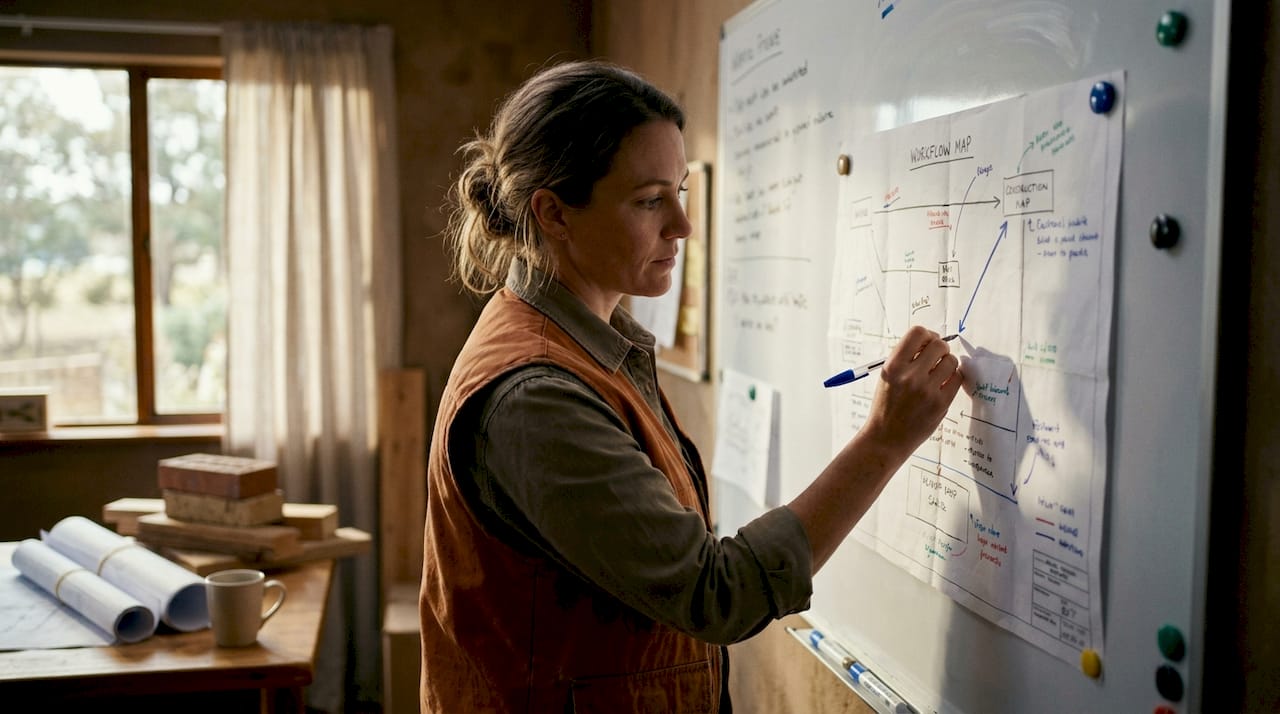
Lean construction principles form the theoretical backbone of this practice. Lean targets waste reduction and continuous improvement across the entire project lifecycle. When you combine lean thinking with digital tools like Building Information Modeling (BIM) and real-time dashboards, you get a system that both prevents problems and surfaces them fast when they occur.
What are the core steps in construction process improvement?
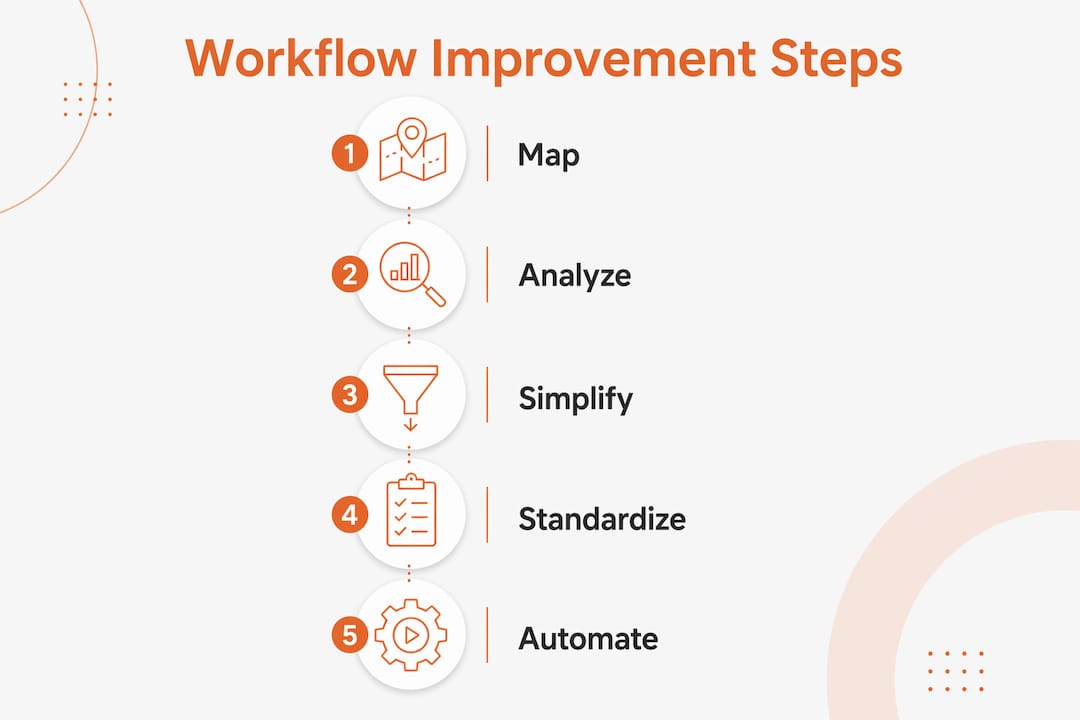
Effective construction process improvement follows a repeatable sequence. Skipping steps, especially the audit phase, is the most common reason optimization efforts fail.
- Audit your current workflows. Document every task, approval, and hand-off as it actually happens today, not as it is supposed to happen. Look for steps that create waiting, duplication, or confusion.
- Eliminate non-value-added activities. Cut redundant manual steps, unnecessary approval layers, and any task that does not directly move the project forward.
- Standardize repeatable tasks. Build templates for RFIs, submittals, change orders, and daily reports. Consistency reduces errors and speeds up training for new crew members.
- Automate routine processes. Once a workflow is clean and standardized, apply software automation to handle scheduling notifications, document routing, and status updates. Automating inefficient workflows before simplifying them only digitizes the waste.
- Monitor KPIs and refine continuously. Track metrics like cycle time per approval, rework rate, and schedule variance. Use that data to identify the next bottleneck.
Pro Tip: Before you buy any field app or enterprise platform, spend two weeks mapping your current process on paper. You will find at least three steps you can eliminate for free before spending a dollar on software.
The five-step sequence above reflects standard industry practice as of 2026. It applies equally to residential contractors managing a $2 million remodel and commercial project managers running a $50 million institutional build.
How do lean construction and digital technologies work together?
Lean construction and digital technology are most powerful when they operate as a single system, not as separate initiatives. Lean provides the thinking framework. Technology provides the execution infrastructure.
“Integrating Lean Construction, BIM, and emerging technologies across the entire project lifecycle optimizes workflows, improves cost control, and enables real-time monitoring.” Framework for Optimizing the Construction Process
BIM creates a centralized data environment where estimators, field crews, and subcontractors all work from the same model. That shared source of truth reduces site errors and eliminates the version-control problems that plague paper-based projects. When a design change happens, every stakeholder sees it immediately.
Real-time digital dashboards add a layer of transparency that lean principles demand. Instead of waiting for a weekly progress meeting to learn that concrete pours are running two days behind, a project manager sees the delay the same afternoon it develops. That speed of information is what makes proactive management possible. Workflow dashboards have become a standard feature of well-run commercial projects.
Emerging technologies extend these gains further. AI-driven estimating tools reduce bid preparation time and improve cost accuracy. IoT sensors on equipment track utilization and flag maintenance needs before breakdowns cause downtime. The table below shows how each technology layer contributes to the overall system.
| Technology | Primary function | Workflow benefit |
|---|---|---|
| BIM | Centralized project data | Eliminates version conflicts, speeds approvals |
| Real-time dashboards | Live progress monitoring | Enables same-day problem response |
| AI estimating tools | Automated cost modeling | Reduces bid errors and preparation time |
| IoT sensors | Equipment and site monitoring | Prevents unplanned downtime |
Managing risk during design is one area where this technology stack pays off early. Catching coordination conflicts in the model before breaking ground costs a fraction of resolving them in the field.
What practical strategies help contractors sustain workflow gains?
Sustained workflow improvement requires more than a one-time process audit. The contractors who hold their gains treat workflow management as an ongoing discipline, not a project phase.
- Map before you automate. Workflow mapping is the foundation for meaningful automation. A clean, documented process is a prerequisite, not an afterthought.
- Use a centralized communication platform. Whether you run a field app or an enterprise platform, all project communication should flow through one system. Parallel channels (text, email, paper) create the hand-off gaps that cause rework.
- Standardize document templates. RFIs, submittals, and change orders that follow a consistent format move through approval chains faster. They also create a reliable audit trail for dispute resolution.
- Involve frontline workers in process design. Field crews know where the real bottlenecks are. A foreman who helped design a new submittal process will champion it. One who had it imposed from the office will work around it.
- Use maturity tiers for gradual adoption. Incremental introduction of standard workflows reduces resistance from field teams. Start with one trade or one project phase, prove the results, then expand.
The process improvement strategies that stick are the ones built with input from the people doing the work. Top-down mandates without frontline buy-in consistently fail within two project cycles.
Pro Tip: Frame standardization to your field teams as a safety and consistency tool, not a control mechanism. Crews adopt standards faster when they understand the “why” behind each step.
Construction bid automation is one area where standardization delivers immediate, measurable returns. Templated bid packages reduce preparation time and improve win rates by making proposals easier to evaluate.
What are the measurable benefits and real challenges of workflow optimization?
The evidence for workflow optimization is quantitative, not just theoretical. Integrating lean techniques with real-time digital dashboards reduced excavation phase duration by 15% and saved approximately 234.88 hours on a large institutional project. That is a meaningful cost reduction on a single project phase. Scaled across a full project portfolio, the cumulative savings are substantial.
Beyond time savings, optimized workflows improve quality and safety. Standardized processes reduce the variability that causes defects and near-misses. Predictable hand-offs mean fewer workers waiting on information or materials, which reduces the rushed decisions that lead to accidents.
The challenges are real, though. Resistance to standardization is the most common barrier. Experienced tradespeople often view new processes as bureaucracy. Leadership commitment and frontline empowerment are both required to move past that resistance. Neither alone is sufficient.
A second challenge is the temptation to automate before simplifying. Project managers who skip the mapping phase and go straight to software implementation end up with faster versions of broken processes. The discipline to audit first and automate second is what separates successful implementations from expensive failures.
Ongoing monitoring prevents backsliding. Workflows function as living systems that require continuous refinement after each project closeout. The contractors who build post-project reviews into their standard operating procedure find and fix new bottlenecks before they become chronic problems.
Key Takeaways
Construction workflow optimization delivers measurable time and cost savings only when contractors audit processes first, standardize before automating, and build a culture of continuous improvement across every project.
| Point | Details |
|---|---|
| Audit before automating | Map current workflows to eliminate waste before applying any software or automation tool. |
| Lean plus digital integration | Combining lean principles with BIM and dashboards reduces errors and enables same-day problem response. |
| Standardize repeatable tasks | Templates for RFIs, submittals, and change orders speed approvals and reduce rework across all project types. |
| Frontline involvement is critical | Field crews who help design processes adopt them. Those who have processes imposed on them resist them. |
| Treat workflows as living systems | Post-project reviews identify new bottlenecks and prevent gains from eroding over time. |
Why I think most contractors underestimate the cultural side of workflow optimization
After working with contractors across residential and commercial sectors, the pattern is consistent. The firms that invest in technology and skip the cultural work see modest, short-lived gains. The firms that spend equal energy on people and process see compounding improvements year over year.
The uncomfortable truth is that workflow optimization is 40% process design and 60% behavior change. A perfectly mapped workflow that your foremen ignore is worthless. A slightly imperfect process that your whole team follows consistently will outperform it every time.
I have seen mid-sized contractors scale from $5 million to $50 million in revenue not because they bought the best software, but because they built a culture where every project closeout fed lessons back into the next project’s workflow. That feedback loop, what lean practitioners call kaizen, is the actual engine of improvement. The technology just makes it faster.
My advice: start with one process, one project, and one team. Prove the results in a context your skeptics can see. Then let the results do the selling for you. Phased adoption beats a company-wide rollout every time, because it gives you real data and real advocates before you ask the whole organization to change.
— Rowena
How Rconstructionsolutions supports your workflow improvement goals
Rconstructionsolutions brings over 30 years of hands-on construction experience to every engagement. The team works directly with residential and commercial contractors to audit current processes, build standardized templates, and implement the right tools for each firm’s scale and project type.

Contractors looking for practical starting points can access ready-to-use templates, workflow guides, and process checklists through The Sandbox, Rconstructionsolutions’ resource hub built specifically for contractors. For firms ready to work with an expert directly, the construction consulting services page outlines how Rconstructionsolutions partners with project managers and owners to build lasting process improvements. The goal is always the same: measurable results, not generic advice.
FAQ
What is construction workflow optimization in simple terms?
Construction workflow optimization is the process of identifying, simplifying, and standardizing the tasks and approvals that move a construction project from start to finish. The goal is to reduce delays, rework, and wasted effort on every project.
How does lean construction relate to workflow optimization?
Lean construction is the methodology that drives workflow optimization. It focuses on eliminating waste and building continuous improvement into every project phase, often supported by digital tools like BIM and real-time dashboards.
What is the biggest mistake contractors make when optimizing workflows?
The most common mistake is automating a broken process. Mapping and simplifying workflows before applying software prevents contractors from digitizing waste instead of eliminating it.
How long does it take to see results from workflow optimization?
Results vary by project size and starting point, but contractors who audit and standardize a single process first typically see measurable improvements within one project cycle. Sustained gains build over multiple projects as feedback loops mature.
What KPIs should contractors track to measure workflow performance?
The most useful metrics are approval cycle time, rework rate, schedule variance by phase, and the number of RFIs generated per project. Tracking these consistently across projects reveals where bottlenecks recur and where improvements are holding.