Construction Advocacy for Developers: Strategies for Project Success | R. Construction Solutions
Construction advocacy is defined as the organized effort to engage policymakers, regulators, and project stakeholders to shape the policies and approval processes that directly impact construction projects. For developers, this practice operates on two levels: influencing the broader regulatory framework before projects begin, and actively navigating entitlement and permitting workflows once a project is underway. Organizations like the Construction Management Association of America (CMAA), the American Society of Civil Engineers (ASCE), and New York City’s Project Advocates program each demonstrate how structured advocacy translates into faster approvals, fewer compliance corrections, and reduced schedule risk. Understanding what construction advocacy means for developers is not optional in 2026. It is a core project management discipline.
What does construction advocacy mean for developers?
Construction advocacy, in the industry’s recognized terminology, refers to organized efforts engaging policymakers and stakeholders to influence policies that directly shape construction projects. For developers, this is not abstract lobbying. It is a structured practice that determines whether your permits move in weeks or months.
The role of advocacy in construction sits at the intersection of regulatory compliance and project delivery. When building codes shift, zoning rules change, or plan review processes get restructured, developers who have engaged in advocacy are positioned to adapt quickly. Those who have not are left reacting to changes they did not see coming.
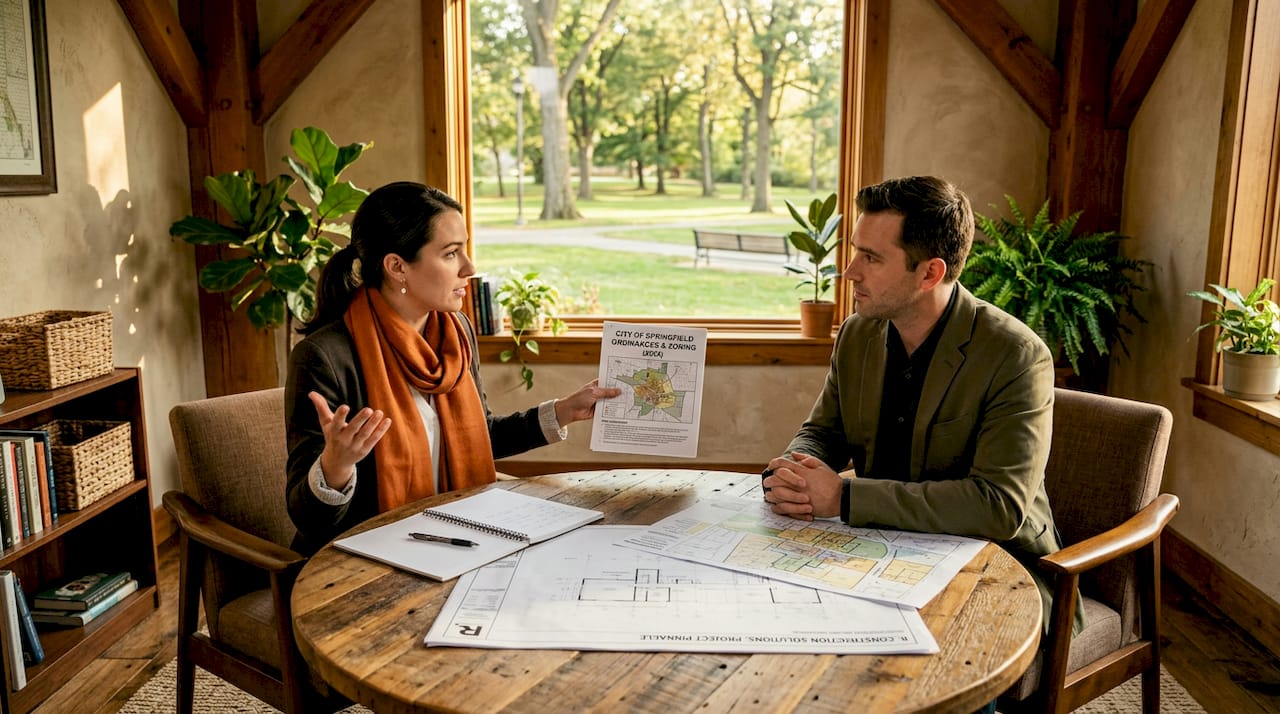
CMAA’s Government Advocacy Committee and ASCE both demonstrate that advocacy shapes building codes, zoning regulations, and industry standards in ways that directly affect project timelines and costs. This is not a peripheral concern. A zoning amendment that a developer helped shape through advocacy can eliminate months of variance hearings. One that catches a developer off guard can halt a project entirely.
The importance of construction advocacy becomes clearest when you examine what happens without it. Developers who treat regulatory engagement as a one-time checkbox rather than a continuous practice face repeated plan review cycles, unexpected code interpretations, and approval delays that compound across a project’s schedule. Small friction points snowball into costly overruns.
How advocacy shapes entitlement and regulatory workflows
The direct connection between advocacy and entitlement workflows is where developers feel the most immediate impact. Advocacy influences plan reviews, permit approvals, and zoning interpretations. Each of these touchpoints represents a potential delay or a cleared path forward, depending on how well your team has engaged with the process.
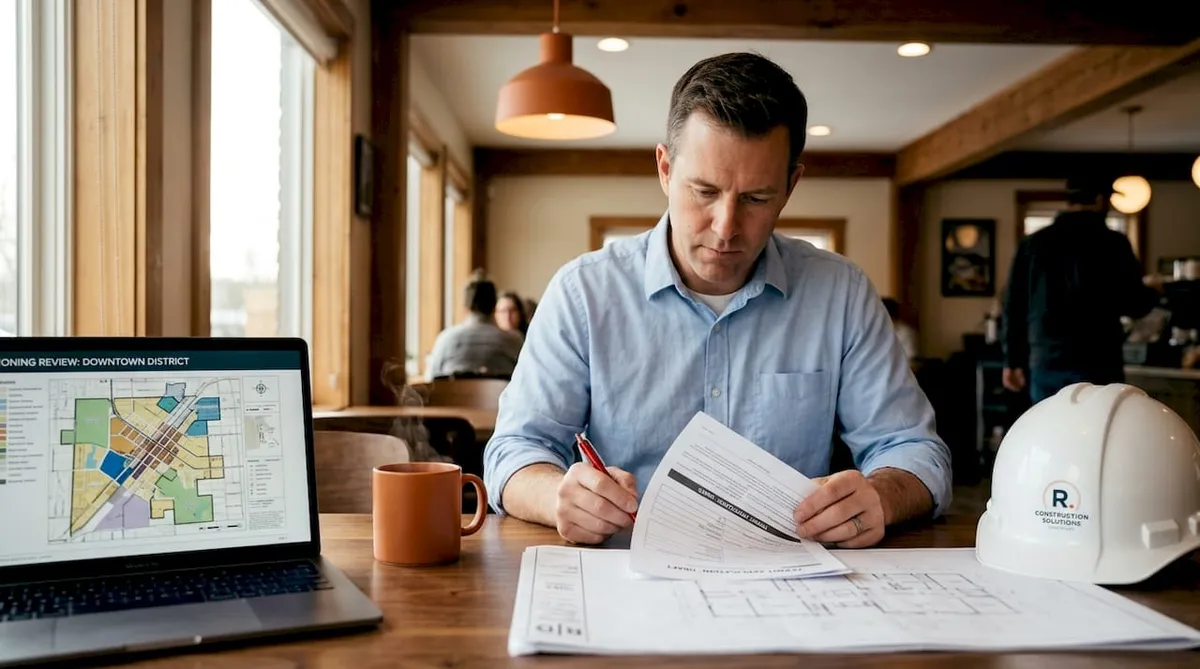
New York City’s Project Advocates program offers one of the clearest real-world illustrations. Project Advocates serve as a single point of contact, providing technical assistance and coordinating across city departments to help developers understand approval processes and reach timely project completion. This is downstream advocacy in practice: a dedicated liaison who reduces friction between your project and the regulatory machinery.
The consequences of poor advocacy at this stage are specific and measurable. Incomplete application packages trigger correction cycles. Misaligned sequencing of approvals creates dependencies that stall progress. Lack of coordination across departments means one agency’s approval sits waiting on another’s review that nobody tracked. These are not hypothetical risks. They are the standard outcome when advocacy is treated as an afterthought.
Here is what effective downstream advocacy looks like in practice:
- Single point of contact: Assign or contract one person responsible for tracking every approval touchpoint and maintaining relationships with reviewing agencies.
- Application package quality: Submit thorough, pre-reviewed packages that anticipate common correction triggers before the first submission.
- Approval sequencing: Map the full approval chain at project outset and sequence submissions to avoid creating bottlenecks.
- Proactive communication: Maintain regular contact with plan examiners and inspectors rather than waiting for formal notices.
- Cross-departmental tracking: Monitor progress across all reviewing departments simultaneously, not sequentially.
Pro Tip: Before submitting any major permit application, request a pre-application meeting with the reviewing agency. This single step consistently reduces first-round correction rates and builds the working relationship your project will depend on for months.
Upstream vs. downstream advocacy: what developers need to know
Advocacy in the development industry operates at two distinct levels, and confusing them leads to gaps in your project strategy. Understanding both is the foundation of any effective advocacy plan.
Upstream advocacy means shaping the laws, regulations, and industry standards before your project ever breaks ground. This is where organizations like CMAA and ASCE operate. Their government advocacy committees monitor legislation affecting the construction management industry across multiple legislative cycles. Developers who participate in or align with these efforts gain early visibility into regulatory changes and sometimes influence the outcome directly.
Downstream advocacy is the active navigation of approval processes for a specific project. It is operational, not political. It means coordinating with plan examiners, managing inspection schedules, and resolving compliance questions in real time. NYC’s Project Advocates model is the clearest example of this in action.
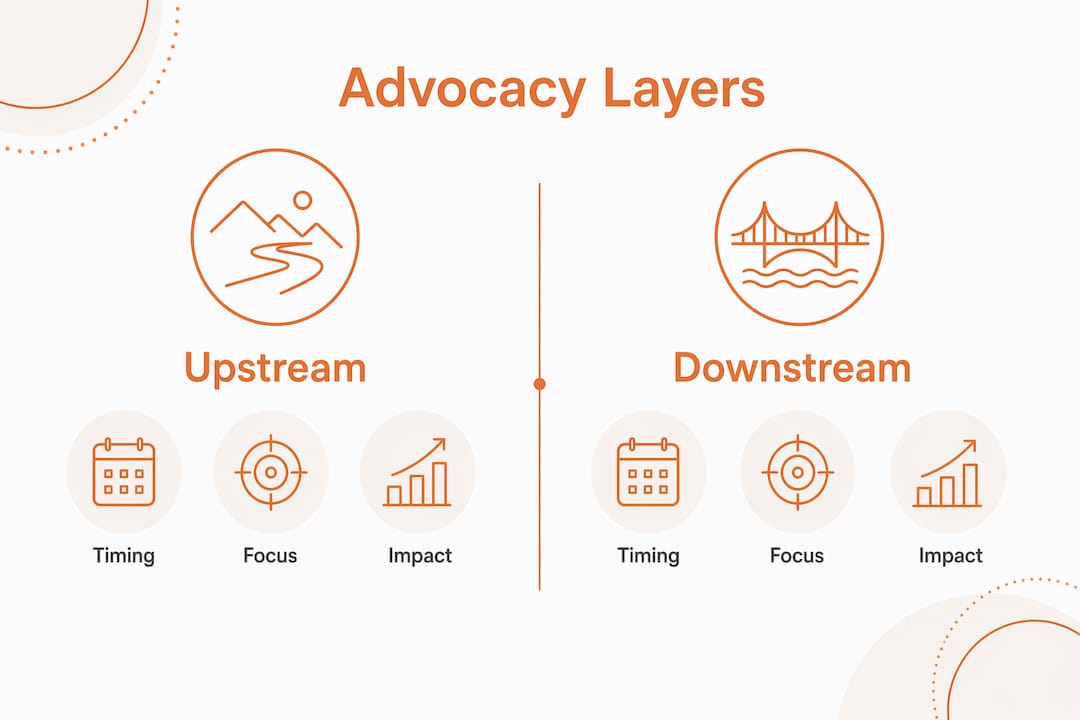
The table below compares both advocacy layers across the dimensions that matter most to developers.
| Dimension | Upstream advocacy | Downstream advocacy |
|---|---|---|
| Timing | Before project initiation | During entitlement and permitting |
| Primary goal | Shape regulations and standards | Navigate and accelerate approvals |
| Key actors | CMAA, ASCE, trade associations, legislators | Project advocates, plan examiners, inspectors |
| Developer role | Participate, monitor, comment | Coordinate, submit, respond |
| Risk mitigated | Regulatory surprise, code changes | Delays, correction cycles, approval gaps |
| Time horizon | Years | Weeks to months |
Aligning both levels of advocacy reduces schedule risk at every project phase. A developer who has tracked upstream regulatory changes through CMAA’s committee work will not be blindsided by a new code requirement during plan review. And a developer with strong downstream advocacy practices will move through that plan review faster than competitors who submit cold.
Pro Tip: Map your project’s regulatory calendar against your jurisdiction’s legislative session schedule. Regulatory changes often follow legislative cycles, and knowing when new rules take effect lets you sequence your approvals to avoid transitional ambiguity.
Practical steps to build advocacy into your project management
Effective advocacy is not a one-time outreach effort. Structured advocacy requires continuous monitoring and translation of regulatory changes into coordinated project actions. Here is how to build that into your workflow.
-
Monitor legislation and regulatory activity continuously. Subscribe to updates from CMAA, ASCE, and your local building department. Assign someone on your team to track changes that affect your project type and jurisdiction. Regulatory changes rarely arrive with adequate notice, and early awareness is a direct competitive advantage.
-
Establish a single point of contact for each project’s advocacy function. Whether this is an internal project manager or an external consultant, one person should own all regulatory relationships for a given project. Fragmented communication with agencies is one of the most common causes of approval delays.
-
Sequence your approvals deliberately. Multiple approval touchpoints require a coordinated sequencing strategy. Map every required approval at project outset, identify dependencies, and build your submission schedule around the critical path through the regulatory process, not just the construction schedule.
-
Prepare thorough application packages before first submission. Review your applications against the agency’s correction checklist before submitting. One additional week of internal review before submission routinely saves four to six weeks of correction cycles.
-
Engage in public comment and stakeholder processes. Starting advocacy through public comments and stakeholder meetings gives developers a voice in shaping the regulatory environment they operate in. This is not just civic participation. It is risk management.
-
Build cross-departmental coordination into your approval tracking. Use a shared tracking system that shows the status of every approval across every agency simultaneously. Waiting for one department’s approval before engaging another is a schedule killer.
Pro Tip: Treat your regulatory relationships the same way you treat subcontractor relationships. Regular check-ins, clear communication, and mutual respect produce better outcomes than transactional, deadline-driven contact.
For developers working through process improvement in construction, advocacy integration follows the same logic as any workflow improvement: identify the friction points, assign ownership, and build systems that prevent problems rather than react to them.
Key benefits advocacy delivers for developers and the industry
Construction advocacy delivers measurable benefits at both the project level and the industry level. The two reinforce each other.
At the project level, developers who practice structured advocacy consistently achieve faster approval timelines, fewer correction cycles, and stronger working relationships with reviewing agencies. These are not soft benefits. They translate directly into reduced carrying costs, earlier project delivery, and improved margins.
At the industry level, advocacy promotes workforce development, ethical standards, and sustainable construction practices. Industry groups that advocate for training programs and skilled labor pipelines directly address the workforce gaps that slow projects down. Advocacy for sustainable building standards creates a regulatory environment where compliant developers have a competitive advantage over those who cut corners.
The broader benefits developers gain from active advocacy engagement include:
- Reduced approval timelines through established agency relationships and pre-submission coordination.
- Lower compliance risk from early visibility into regulatory changes before they affect active projects.
- Stronger community relationships that reduce opposition during public comment periods.
- Access to funding and incentive programs that advocacy groups help shape and publicize.
- Workforce stability supported by industry-wide training and certification programs that advocacy advances.
Advocacy as a subject-matter expert role also means bringing technical truth to policymakers who lack construction expertise. When developers and engineers engage regulators with data on infrastructure needs and project realities, policy outcomes improve for everyone. This is not partisan activity. It is professional responsibility.
Key takeaways
Construction advocacy gives developers direct control over the regulatory conditions that determine project success, making it a core project management discipline rather than an optional industry activity.
| Point | Details |
|---|---|
| Two advocacy layers | Upstream shapes regulations; downstream navigates approvals. Both reduce schedule risk. |
| Single point of contact | Assign one person to own all regulatory relationships for each project. |
| Sequence approvals deliberately | Map every approval dependency at project outset to avoid critical-path bottlenecks. |
| Continuous monitoring matters | Track legislative and regulatory changes through CMAA and ASCE to stay ahead of code shifts. |
| Advocacy builds relationships | Consistent agency engagement reduces correction cycles and accelerates approvals over time. |
Why I think most developers are leaving advocacy on the table
Most developers I have worked with treat advocacy as something other people do. They see CMAA committees and ASCE public comment periods as activities for trade association staff, not for project teams managing deadlines and budgets. That framing is costing them real money.
The developers who move projects fastest are not always the ones with the best designs or the deepest pockets. They are the ones who have built genuine working relationships with the agencies that control their approval timelines. They know the plan examiners by name. They have participated in the public comment processes that shaped the codes they now work under. They do not get surprised by regulatory changes because they were in the room when those changes were discussed.
The most common pitfall I see is reactive advocacy. A developer hits a wall during plan review, then scrambles to find someone who can navigate the agency relationship they never built. That scramble is expensive and slow. The fix is not complicated. It requires treating advocacy as a scheduled, budgeted function of project management rather than an emergency response.
Proactive advocacy also changes how agencies perceive your projects. Regulators are more likely to work constructively with developers they recognize as good-faith participants in the process. That goodwill does not show up on a balance sheet, but it shows up in approval timelines.
If you are a developer who has not yet built advocacy into your project management workflow, the entry point is simpler than you think. Start by attending one public comment session. Subscribe to one regulatory update feed. Assign one person to own agency relationships for your next project. Those small steps compound into a structural advantage over time.
— Rowena
How Rconstructionsolutions helps developers navigate advocacy
Developers who want to move faster through entitlement and permitting processes need more than general advice. They need a consulting partner with hands-on knowledge of how approval workflows actually operate.
Rconstructionsolutions brings over 30 years of construction operations experience to the advocacy and regulatory challenges developers face every day. From coordinating plan review submissions to building the cross-departmental tracking systems that keep approvals on schedule, the team provides the specialized consulting support that turns regulatory friction into a managed, predictable process. Whether you are navigating a complex entitlement workflow or building advocacy practices into your project management system for the first time, Rconstructionsolutions delivers strategies tailored to your project type, jurisdiction, and growth goals.
FAQ
What is construction advocacy in simple terms?
Construction advocacy is the organized effort to influence the policies, regulations, and approval processes that affect construction projects. It includes both shaping industry-wide regulations and navigating project-specific permitting and entitlement workflows.
How does construction advocacy help developers specifically?
Advocacy helps developers by reducing approval timelines, minimizing correction cycles, and building agency relationships that make regulatory navigation faster and more predictable. Structured advocacy also provides early warning of regulatory changes before they affect active projects.
What is the difference between upstream and downstream advocacy?
Upstream advocacy shapes laws and regulations before projects begin, typically through organizations like CMAA or ASCE. Downstream advocacy is the active coordination of approvals, inspections, and plan reviews for a specific project already in progress.
Do developers need to join industry groups to practice advocacy?
Joining groups like CMAA or ASCE accelerates advocacy effectiveness, but developers can start with smaller steps. Attending public comment sessions, subscribing to regulatory update feeds, and assigning a dedicated approval coordinator are all forms of advocacy that produce results without formal membership.
What happens when developers ignore construction advocacy?
Developers who skip structured advocacy face repeated plan review corrections, unexpected code changes, and approval delays that compound across the project schedule. These issues translate directly into higher carrying costs and missed delivery deadlines.